


That the state must be separate from the Church is a thesis absolutely false, a most pernicious error.
— Pope St. Pius X
The “separation of church and state” is a proposition that sounds reasonable to modern ears. Moreover, it’s always accepted as a given, indisputable fact, and everyone seems to agree that religion —with the postmodern, negative connotation that the word now carries for many— should have no place in the public sphere.
This proposition, however, is built on a fundamental lie: that government can be morally neutral and that there is such a thing as a non-religious person or group of people. But the last decades have shown that’s not the case.
Every law is a moral statement. Every policy reflects someone’s vision of the good. Everyone believes in something. Whether that’s an ideology, a faith, a desire, “science”, or anything else, everyone has a specific set of beliefs and a moral hierarchy that rules their actions. In that sense, everyone —even the starkest naturalists— are religious in practice.
The question thus becomes not whether or not the state is religious, but rather: whose morality will rule?
When we removed Christian morality from government, we didn’t create an utopical neutral secular space. We created a moral vacuum that allowed the state to create its own religion, and we are now suffering the consequences.
Morality Requires Religion
Every single law passes a moral claim, assigning some things as evil and some things as good. Morality is the foundation of law, and every single decision that a government makes is moral in nature: abortion laws, marriage laws, education policy, even government spending are ways of making moral claims, all guided by a moral compass that aims to point towards the good.
So the question that naturally follows is, who gets to decide what’s right and wrong? Who gets to determine (and encourage through lawmaking), the moral compass of a society?
Only the most honest atheist will accept, that if the answer to the previous question is not God, then the entire concept of objective morality shatters, and all we’re left with is a radical subjectivism in which right and wrong are mere opinions. And, if God doesn’t determine morality, then whoever has more power does.
The State, being the governing power, if it’s not aligned with Christian morality, will fill the void with its own religion.
And for the skeptics who might still doubt that the “secular” state is, in practice, as religious as Christ’s Church, consider that it’s a system which has:
Its own dogmas (equality, diversity, tolerance, progress)
Its own sins (racism, sexism, homophobia, “hate speech”)
Its own priesthood (bureaucrats, academics, activists, scientists)
Its own excommunication (cancellation, deplatforming, jail)
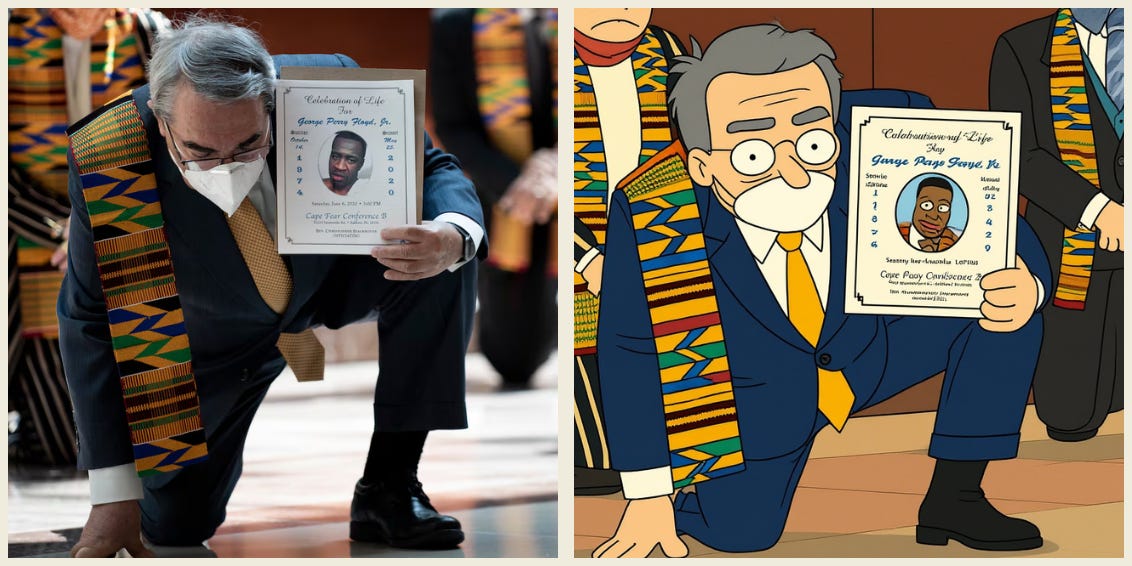
It’s own martyrs (George Floyd)
The attempt to “separate” state and Church didn’t end state religion, it just replaced Christianity with the new, postmodern religion that is progressivism.
The natural progression of a “secular” state is that by rejecting divine authority, the government claims that same level of authority for itself.


The real problem is this: when the highest law comes from the state, what naturally follows is that the very rights of people come from the government, not from God. And that, as anyone can clearly see, is a huge problem.
Without God, the government can assign immoral “rights” (abortion, sex-change for minors, etc.), and revoke moral ones (free speech, for example). Every single atrocity committed by totalitarian 20th century regimes came from states that rejected divine law. Something will be at the very top of the moral hierarchy, and if that’s not God, then it’s the government, a dictator, or an ideology.
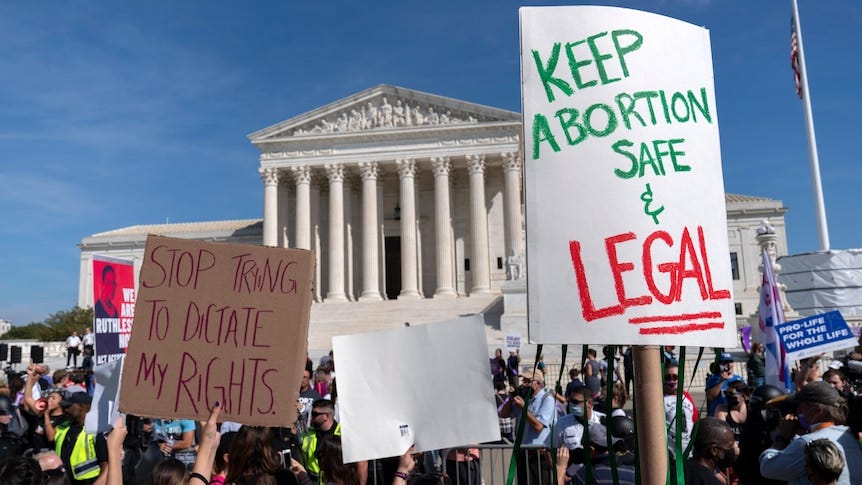
We can see this clearly in how the new state religion operates. It’s not at all “unreligious”. It’s religious in the worst possible way: in the case of abortion the state decides personhood, with gender ideology the state defines reality, and with “hate” speech laws the state determines truth.
The most common objection to these points is something along the lines of “who are you to decide what is true and what isn’t?”. The problem with that objection is that it denies objective morality and objective truth. These things cannot be subjective, and Catholic morality is the objective truth. If we don’t believe that, then what are we doing? Everyone believes they’re right, that’s true. But that doesn’t mean that everyone is right.
And even if we ignore the underlying extreme moral relativism that such an objection implies, all the proof we need to support that from all the options, Christian values are the ones which are objectively correct is the clear cultural and social degeneration that has occurred since we decided that these Christian values that built the most prosperous, beautiful civilization that has ever existed were somehow no longer necessary.
There is right and wrong. Not everything is subjective. If we don’t believe that, then we open the door to the radical subjectivism that allows for multiple, personal “truths” that are nothing more than false beliefs, doctrines and ideologies.
A Better Option
We need to understand that the state derives its authority from God, not from itself. Thus, the natural order of things is cooperation between Church and state, not the artificial separation that leads to the degeneration of values for the sake of “tolerance”, individualism, and subjective “truth”.
Now, this doesn’t mean that the Church should dominate the state (or viceversa), it means that they should both cooperate: the state should be aligned with Christian morals, to avoid atrocities like the ones we’re seeing.
Both the spiritual authority (the Church) and the temporal authority (State) come from God, but they should both be subject to God’s authority. In that sense, the state has no authority to make moral law independent of God’s law, as its authority comes from God. This is how Christendom built Western civilization for the last 2000 years, and that’s the correct way to integrate Church and state.
The state’s role is to protect and promote the common good as defined by God, not by majority vote or judicial decree. We know we are fallen, flawed and sinful, so we do not know better than God. The majority can be dead wrong. The majority can be self-destructive in nature. The majority can be so blinded by sin that it votes in favor of the mass genocide of abortion.
This is also why idolizing democracy is a terrible mistake, but that’s a topic for another article.
You Can’t Avoid Religion
The real question we should be asking ourselves is not “Should religion interfere with the state?”, but rather “Which religion will the state enforce?”. Because the truth is that the state will enforce a religion: either Christianity or secular progressivism (or any other false organized religion).
The usual response to this is that we should keep religion private or we’ll have theocracy. But we already have theocracy, in the form of a progressive, liberal, transhumanist theocracy imposing its morality through law with an iron fist: Churches are destroyed, Christian symbols banned as they’re “offensive”, Christians are forced to violate their conscience, and progressive ideology is mandated in schools. Theocracy is already here, it’s just the worst possible kind.
From all the options, the only one that is true, and the one that leads to real human flourishing is Christian morality.
The society that we should aim to build is one in which faith and public life are integrated, laws are based on natural law and divine revelation, and governments step down from their prideful pedestal and accept that their authority comes from God. We need once again to build a form of public Christianity that shapes our culture, instead of rejecting Christ in public to avoid controversy and backlash.
It’s our cowardice which is leading to the decline of the West. We rejected Christ in the public square and bought the comfortable lie that religion is subjective, and thus only fit for private practice.
We can see from history that it’s those societies that submit to God which flourish: Christendom built hospitals, universities, legal systems, and Western civilization as we know it. And the opposite is also true. Those societies that reject Him collapse violently, and the blood shed during the 20th century is proof of that.
The secular experiment failed, and we’re now seeing that it doesn’t lead to the utopical freedom that it promised, but to a tyrannical state claiming powers to itself that only God should wield.
This becomes even more evident when you consider that the effort to separate church and state was never about neutrality, but about replacing Christianity with secular humanism as the official state religion.
We’re not choosing between religion and no religion in government.
We’re choosing between Christianity and progressivism, between divine law and human will, between ordered liberty and totalitarian chaos.
The state will serve someone. The only question is: will it serve God, or will it serve itself?
Thank you for reading!
If you enjoyed this post and could leave a like or comment it would be greatly appreciated, as it will help my work reach more people.
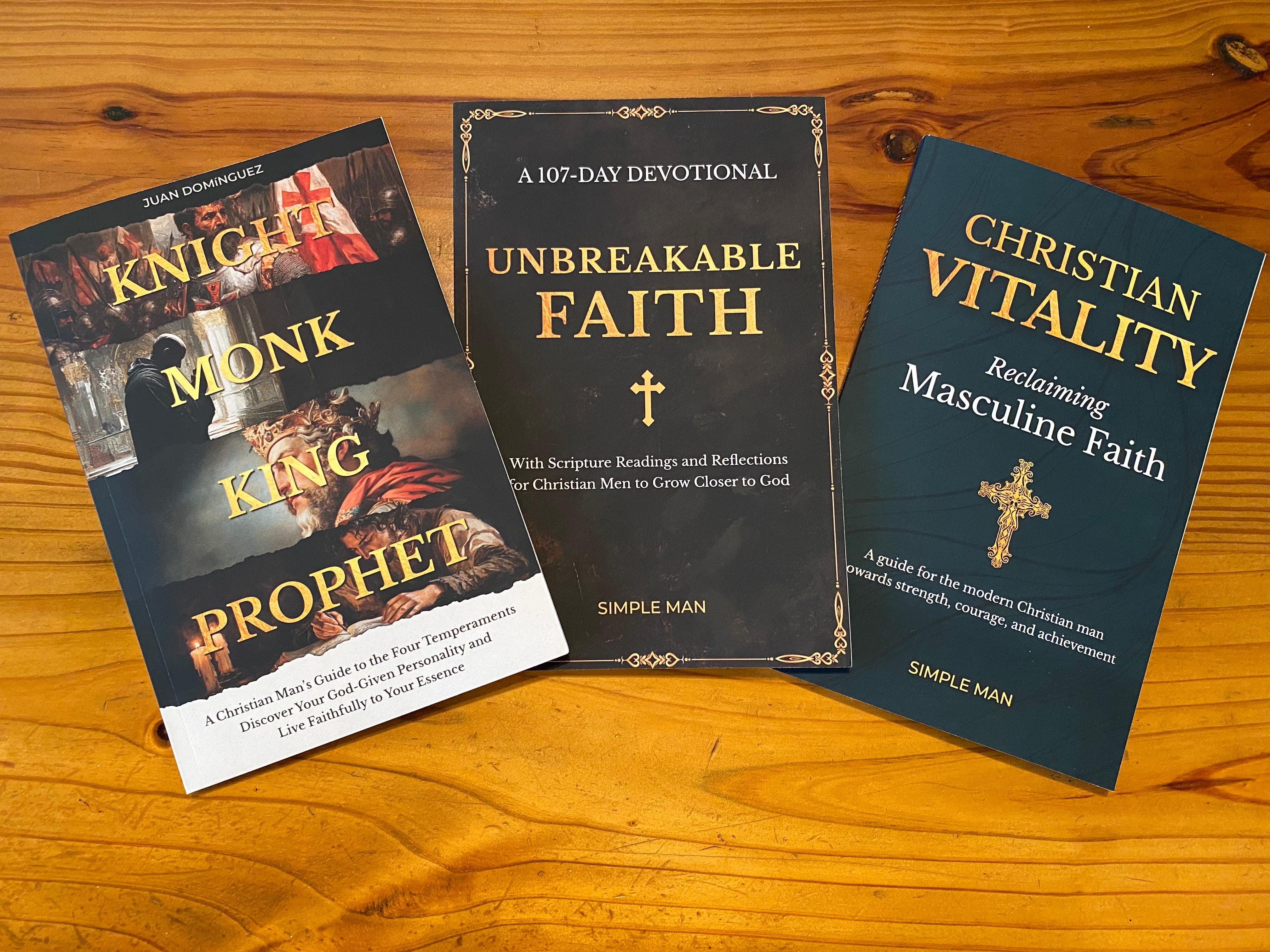
If you liked this article, you’ll love my books.
“It’s our cowardice which is leading to the decline of the West. We rejected Christ in the public square and bought the comfortable lie that religion is subjective, and thus only fit for private practice.”
Gold.
As always, C.S. Lewis utterly nails it with his definition of progress: “We all want progress. But progress means getting nearer to the place where you want to be. And if you have taken a wrong turning then to go forward does not get you any nearer. If you are on the wrong road progress means doing an about-turn and walking back to the right road and in that case the man who turns back soonest is the most progressive man. There is nothing progressive about being pig-headed and refusing to admit a mistake. And I think if you look at the present state of the world it's pretty plain that humanity has been making some big mistake. We're on the wrong road. And if that is so we must go back. Going back is the quickest way on.”
There’s a reason why Christ is always referred to as King of Kings. ¡Viva Cristo Rey!
I love all of your work, and this article is truly phenomenal. I will be using many of these points in future discussions and debates.