


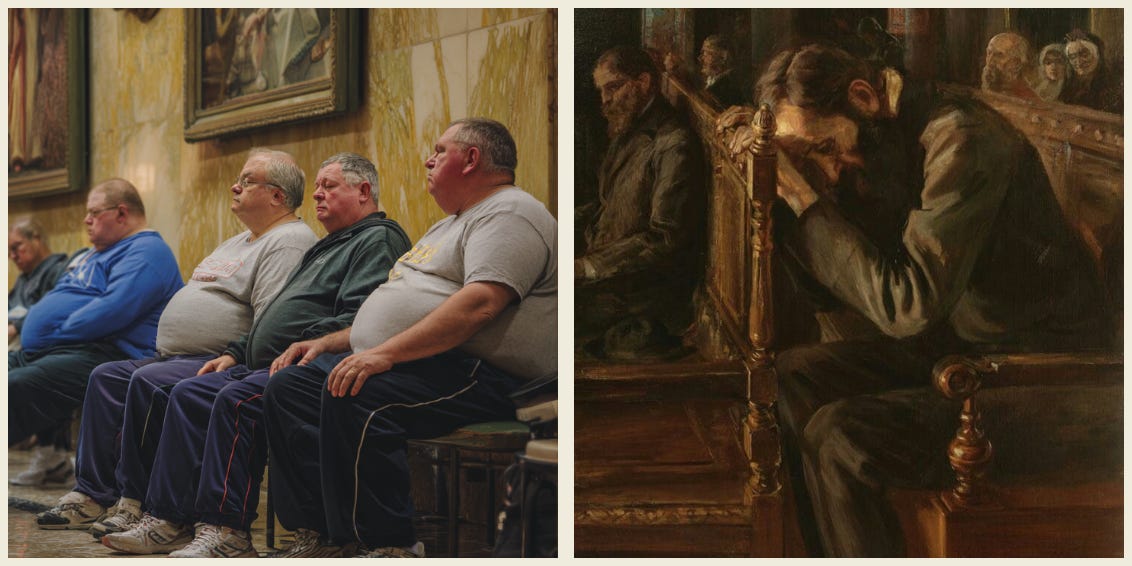
Walk into any congregation of Catholic men and you’ll most likely be met with a concerning picture: you won’t see many admirable men, but mostly passive, soft, often spineless men.
Maybe they’re men of good hearts, but they’re usually weak and powerless. When I first walked into a Catholic church after my conversion, what I found were soft-spoken priests preaching toned-down messages of a hippie kind of “peace and love” Christianity, and soft, pudgy, middle aged men who clearly lived under the leadership of their wives.
Maybe my experience is the exception, but I don’t think that’s the case at all. It’s undeniable that our Church is suffering greatly from a lack of manhood, desperately longing for the return of those men who were willing to fight and die for her Truth.
My intention with this article is not to lay the blame anywhere but at our very own doorstep. Some will blame the Second Vatican Council, others will blame feminism, others will blame pornography, and some will blame the more abstract “culture” of which we are part of.
I blame ourselves. Yes, all of the earlier factors probably play a part, but I refuse to accept this victim culture that always finds a way to avoid holding ourselves accountable.
I blame ourselves because we haven’t been doing our part. I blame ourselves because we have not been answering the call to manhood, and because we have internalized the lies of feminism. I blame ourselves for refusing to detach from childish entertainment and for failing to be intentional with our development as men under God.
But then again, whether we are fully or only partly to blame, my goal in this article also isn’t to complain, but to openly share my concerns with you, and hopefully motivate you to be an uncommon kind of man, one who can help restore the faithful strength that has always been the bedrock of our Church.
What do You See?
Even though I was born and raised in a Catholic household, I let the world distract me and draw me away from Christ for many years.
When I finally found Him again —or rather, when He found me—, my process back towards the Christian faith led me first to a sort of non-denominational Protestantism: I read my Bible, and prayed. However, after realizing the obvious logical and moral inconsistencies of Protestantism (I knew I wasn’t wise enough to interpret Scripture on my own, for starters), I looked towards Catholicism and Orthodoxy as the only places which could provide the necessary authority and tradition to interpret the Bible and guide me towards heaven and sanctity.
What followed was a process of discernment: would I become a Catholic again or would I become an Orthodox Christian?
Orthodoxy was very attractive to me, to the point where I was close to converting to it.
However, in a moment of grace during my ponderings, I realized suddenly that I wanted to be Orthodox mostly because I liked the aesthetics of it. I wanted to be Orthodox really bad, but not because I genuinely believed it to be true, but because I saw Orthodox men and they looked like the kind of man I wanted to be: bold, masculine, deep, strong, courageous, mystical. I was inevitably drawn to that religion which best showed me the kind of man I dreamed of becoming.
Bear in mind, at this point I still didn’t have any arguments in favor of Catholicism either, but it was shocking to realize just how much the aesthetics of Orthodoxy were pulling me towards it.


Long story short, I did my research and decided for the Catholic Church. I absolutely love and respect my Orthodox brothers and sisters, and I long for the day when our Churches can be in full communion. I simply couldn’t ignore all the evidence I found for Catholicism.
The details of my discernment process aren’t relevant for this article, what’s relevant is this: aesthetics and optics matter greatly.
If there is a crisis of masculinity in the Catholic Church, it is painfully evident in what we see in her members. It’s undeniable that most Catholics do not approach our faith with the necessary respect and reverence, and that fact shows itself in how we dress, speak, pray and behave. Our lack of seriousness and our mediocrity is mirrored in every other aspect of our lives.
A big factor that draws away many men from the beauty and strength of Catholicism is that they perceive it be weak and feminine precisely because us, men within the faith, have become complacent and lazy. Men look from the outside, and if they don’t see masculine men inside, they’ll never walk in.
The REAL Catholic faith is profoundly beautiful, and the REAL Catholic man is fearlessly masculine. After all, our role model is Christ Himself, the perfect man, the Lion of Judah. Our Church is the Church of martyrs, of warriors, of crusaders, kings, and prophets.
It’s not Catholicism’s fault. Our faith is perfect, and when practiced properly, the aesthetics of it reflect this perfection and draw every masculine heart to it.
If we’ve been failing to show the proper image, it’s because we’ve misinterpreted our faith and chosen to follow a watered-down Gospel that is easier and more comfortable.
As Catholic men, we are not called to passivity and an inconsequential, comfortable faith, we are called towards virtue, and towards positions of leadership and influence, not to glorify ourselves, but to point others towards the light of Christ. And whether we like it or not, the way we present ourselves, our behavior, our speech, and the image we show the world can either be a great tool to aid us in our mission, or it can be something that involuntarily pushes people away.
Where are All the Men?
Of course aesthetics aren’t the only problem. They are just external consequences of a general lack of fortitude, depth, and masculinity that has poisoned Catholic men all over the world. You don’t have to believe me, all you have to do is open your eyes and look around to see just how true this is.
If that’s not enough, go and ask the young Catholic women in your congregation why they aren’t married already. Maybe some are closeted feminists and are “pursuing a career” or whatever, but what I’ve found is that there is an overabundance of good, young, virtuous women who want nothing more than to be wives and mothers, and yet they aren’t finding men to marry.
And I believe the reason for that is twofold:
Young men are not playing their role: Men are the ones who are tasked with leading. Men are supposed to take the first step, ask a woman out, and drive the relationship forward. And they simply aren’t doing that.
The “red-pill” and "pick-up” culture has convinced men that they should be the ones being chased. This poisonous inversion of the natural order has found its way into Catholic circles, and as a consequence young men act like divas, playing indirect games all the time instead of just asking women out, communicating their intentions clearly, and leading a relationship towards marriage.Young Catholic men are failing to develop holistically, and opt for an exclusively “spiritual” development without ever stopping to consider that they need to develop emotionally, physically, financially, and morally too in order to be attractive to women (and in order to fulfill their roles as men properly).
It’s not enough to pray and go to mass every Sunday. That’s VERY important too. But you cannot ignore the fact that there’s a human component to attraction, and while those things do matter, the other stuff, the stuff which so many neglect because it’s hard and painful, matters too.
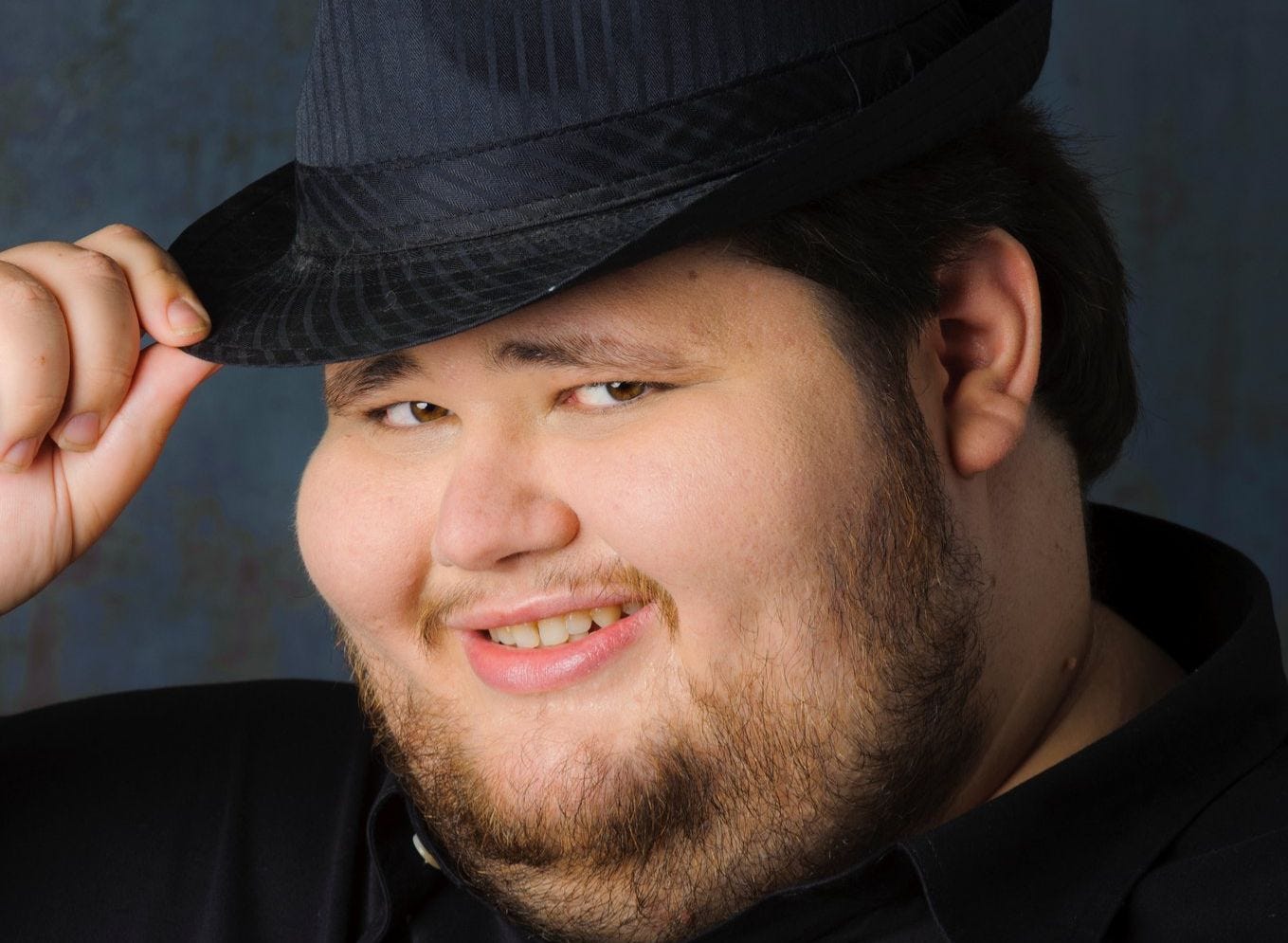
I can predict some backlash coming my way, as it always does when I speak about us men not doing our job. There’s always someone sore and resentful ready to complain that “modern women suck and there’s literally no good women left.” Maybe they’re right.
But it’s a feminist position to believe that the behavior of women degenerates on its own. Men are the ones who lead, and if there’s no good women left, it’s because WE have allowed that to happen, by failing to perform our duty and by cowardly accepting comfort over the burden of leadership.
A real Catholic man isn’t just someone who can pray, but someone who is a man: bold, fearless, strong —physically and mentally—, dangerous but kind, wise but courageous. A Catholic man is a man who practices virtue in everything he does, a Catholic man is a man of both prayer AND action.
I guarantee that if we all made it our mission to pursue virtue and develop holistically so we could glorify God in everything we did, not only would we save the Church from this great crisis of manhood, but none of us would have any issues finding great women to marry.
The traits of manhood, the ones which the Church is so desperate for, are also the traits that young women yearn for in a man, and which they are failing to find. Both the Church and the women in it are begging us to step up and accept our responsibility as men, they are desperate for masculine leadership, and nothing will get better until we accept that responsibility.
The Ghost of Feminism
Will makes a great point: feminism has seeped deep into us, because we’re not 100% immune to propaganda.
What that means is that we’ve internalized a lot of behaviors that damage our masculinity, and make us more feminine, further feeding the demon of effeminacy that is plaguing the Church. The post above is an example of such behaviors, of which there are many.
Another example is what I mentioned earlier about men waiting for women to pursue them in dating. Is that not a feminist behavior? How about waiting for years before getting married? Is that fear of commitment also not a consequence of a feminist, childish spirit?
For us to become the men the Church needs, we need to be brutally honest with ourselves about just how poorly we’ve been playing our role. Take a deep look at yourself and ask yourself if you’ve been accepting the crushing responsibility that comes with being a man.
Do You Understand What Being a Man Means?
My friend Dom from Provident Fathers posted this reel on his Instagram account a few weeks ago, and it’s further proof of just how important it is for us men to accept the burden of responsibility that God placed on our shoulders when He decided to make us male.
Who you are as a man is who the men around you will become. Stop for a second and ponder on what that means. If you’re an example of virtue, you’ll inspire virtue in others. If you’re an example of weakness and cowardice, others will follow you down that path too.
A man is always leading, whether he wants to or not. Where will you lead your people?
How to Fix This Crisis
The good news is that we’re still on time to fix this.
It starts by embracing the burden of sacrificial leadership that is the calling of all men. We cannot keep hiding under a false humility, letting the weight of leadership fall anywhere but on us.
The Church needs men who raise their hands willingly and take on the responsibility we’ve all been so conveniently avoiding. God needs men who dare hold themselves accountable for the crisis of manhood and decide to swim against the current, fighting every day to grow in virtue, refusing to accept the “comfortable Christianity” that is pushing so many souls towards the abyss.
And I heard the voice of the Lord saying, “Whom shall I send, and who will go for us?” Then I said, “Here am I! Send me.”
— Isaiah 6:8
It all starts with a willingness of the heart. A willingness to say, without fear, “Here am I Lord! Send me.” A willingness to listen to God’s calling and to answer it humbly.
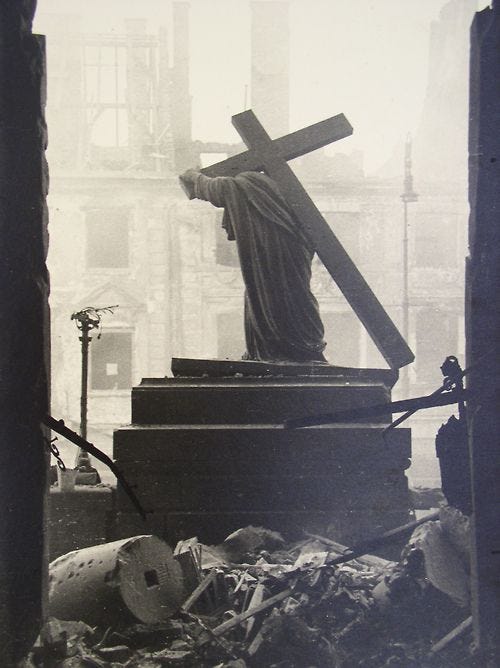
A willingness to not walk through this earth without a cross to carry.
On a more practical level, we can bring about a great revival of masculinity within our faith by starting to show true reverence in the presence of Our Lord. We can choose to kneel to receive the Holy Eucharist, we can wear our best clothes to attend Mass, we can take the Sacraments seriously.
We can take our faith seriously too, by studying about it, by strengthening it rationally as well as spiritually. Lukewarm faith is worse than no faith at all. This is a matter of life and death, not just for us but for all of those who look at us to decide whether or not they’ll open their hearts to The Lord.
We can also be living testaments that true faith transforms everything: by caring for and developing our bodies to be real temples of the Holy Spirit, by developing our intellect and becoming scholars, warriors, and kings.
It’s up to us to lead the Church towards a new revival, one that accurately reflects her beauty and her Truth.
It’s up to each member, each leader, each man, to aim higher, to truly aim for holiness, to accept our vocation to sainthood, and let our faith be the fuel that pushes us towards the highest peaks, both in this world and in the next one.
Thank you for reading!
If you enjoyed this post and could leave a like or comment it would be greatly appreciated, as it will help my work reach more people
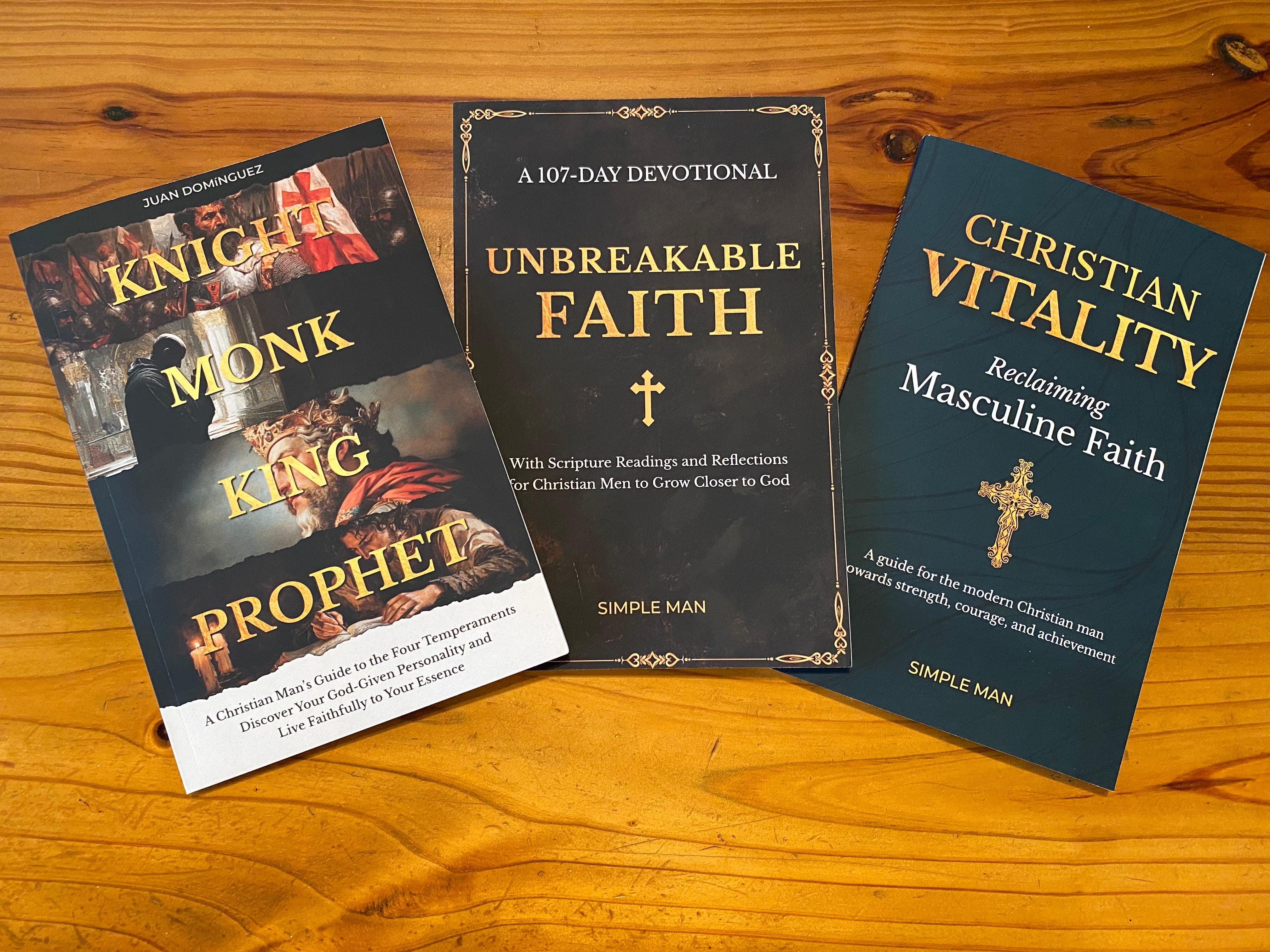
If you liked this article, you’ll love my books.
I’m 70 years old, a lifelong Catholic, and educated through law school at traditional Catholic institutions. My dad’s generation set a great example of Catholic manhood. This essay is an excellent summary of the issue, and I’ve lived through this long downward slide so there’s much I could add. But I’ll limit it to this: about 26 years back, Christians in general & Catholics in particular realized that Christian manhood was under attack and needed a boost. Mens groups grew and my parish had a fantastic one. Early on, however, a number of men dropped out (they were in their mid-40s). Why? They thought it was glorifying a macho image whereas Christ was about peace. I suppose they missed, for example, the Gospel account of Christ flipping tables and cleansing the Temple. There is a generation of Catholics who were given feel-good theology, drowned in radical feminist thought, and thereby given no understanding of Catholic manhood. Pure & simply, they must age out and younger generations of boys & men must be taught the full & true beauty encompassed by the Theology of the Body.
Any good man will be drawn to the more strict and traditional side of the church. Personally, I go to Traditional Latin Mass. It is here that you see the admirable men that are lacking in the church. Im in Los Angeles and our churches are mainly empty, except for the elderly. The only parish offering the Taditional Latin Mass is, by contrast PACKED. So much so that they have had to add more masses to accommodate the influx of people.