



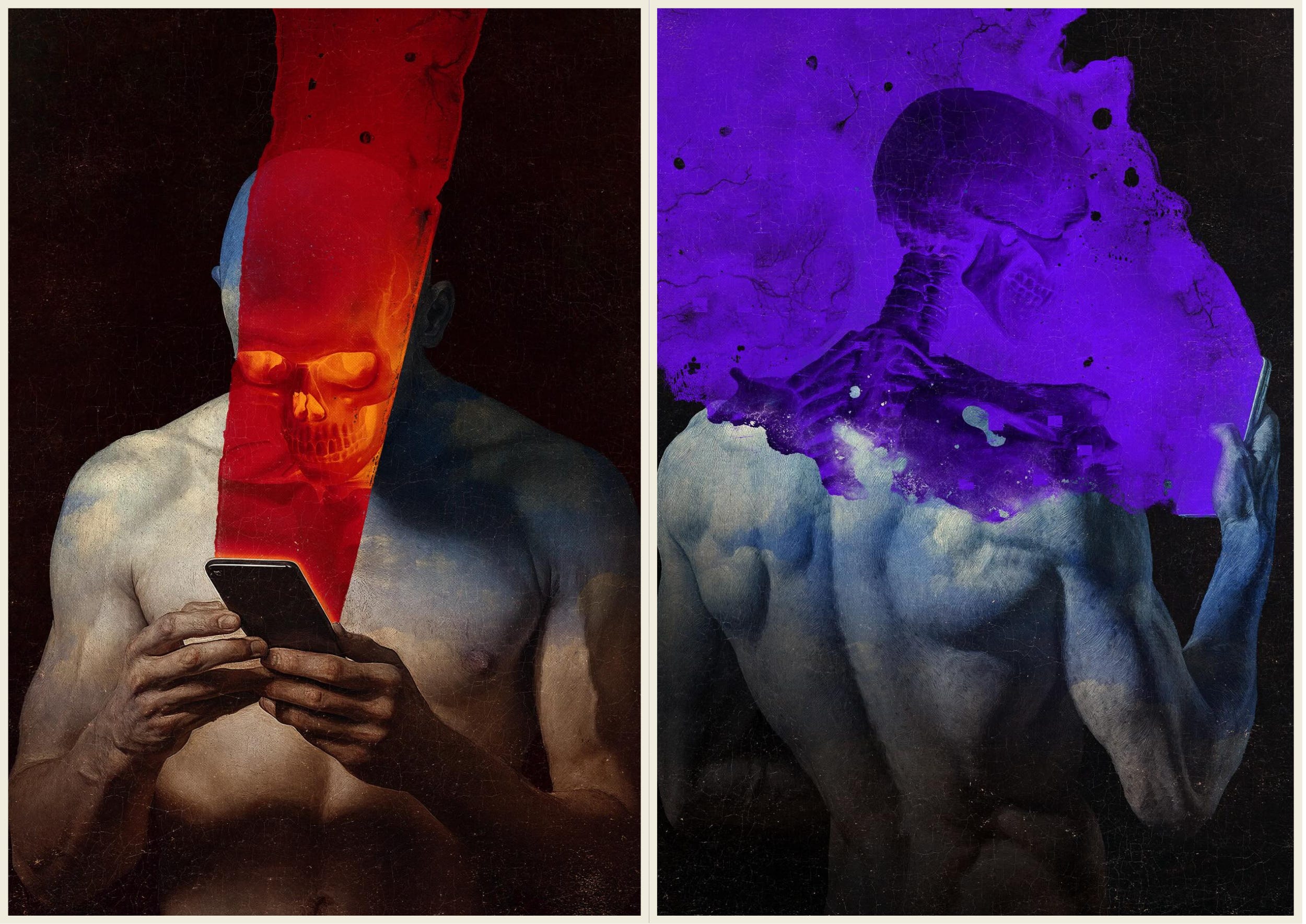
A few days ago, in the middle of a conversation with a family member whom I don’t often talk to, I noticed something interesting that motivated me to write this article: her eyes were jumping all over the place, to her phone, to the door, to the waiter, everywhere but toward me.
This is something that has become more and more common, and it’s, in my opinion, a direct consequence of our quick dopamine addictions and of the loss of attention span that has become the norm thanks to the excessive use of our mobile phones.
We joke about how we’ve become distracted and addicted to cheap dopamine, but under the jokes hides a sinister reality: far from it being a victimless crime, our inability to concentrate for long periods of time is slowly harming us deeply, not just on a personal level, but culturally too.
The Personal Dimension: How This Affects You
The anecdote I related at the beginning of the article isn’t really anything special. It’s the new normal. Most —if not all— the conversations we have nowadays remain on an extremely superficial level, not just because people are slowly becoming less interesting by abandoning genuine hobbies and losing their exploratory spirit (that’s a matter for another article), but more so because it’s impossible to reach deeper levels of discussion when we compulsively pick up our phones every 30 seconds.
Even worse, the man who cannot sit still in a conversation is not merely distracted, but also anxious. The compulsive phone-checking is a symptom of a soul that panics at the prospect of being alone with a thought for more than a few seconds.
This anxious restlessness destroys the possibility of ever going deeper. Anytime you lose your focus on a conversation, you are immediately taken to the surface. When you ask a question and don’t pay attention to the answer because your mind is somewhere else, you miss the opportunity to dive deeper and further pursue a particular line of thought. If you can’t focus on what’s being said —really focus— the conversation will jump from shallow topic to shallow topic, without ever reaching any significant depth, because it’s much easier to ask about the weather or about a football game than it is to pursue the important truths that hide beneath the surface.

In an article I published last year, we looked at the way in which St. Benedict sought to eliminate acedia and restlessness from the monastic life, because he understood just how much damage this inability to stay put caused our souls:
“He understood that moving from place to place was but a symptom of a deeper problem, that of a restless heart that believes the next thing will finally work, or that somewhere else is where you’ll find peace. He understood that restlessness made it incredibly difficult to explore the depths of the soul, achieve any sort of mastery, and get closer to holiness.”
From St. Benedict’s Rule for Stability and Consistency
What St. Benedict identified on a macro level is also true in the micro dimension. He noticed that it took years of focus to master an art and to grow spiritually, and we are seeing that losing our ability to focus on a concept or conversation for more than 10 seconds is making us shallow, perpetually distracted, and anxious.
The damage, however, does not stop at the individual. A culture is nothing more than the sum of the interior lives of its members. When —as we’re seeing now— those interior lives become shallow and colonized by distraction, the society they produce will naturally bear the same mark
The Cultural Dimension: How This Affects Our Culture
As I said at the beginning of this article, we are mostly aware of the consequences that our dopamine addictions have on a personal level, but what happens when an entire society loses its ability to focus and venture into the depths of their own souls?
It’s been said that some of the masterpieces of art and architecture of the ancient world simply couldn’t be created or built nowadays, because there aren’t any artists capable of creating or building them. That is probably true, but it’s also true that things would surely be different if we just managed not to check our phones every time an interesting thought started to form in our minds. Maybe an artist somewhere could paint a new Sistine Chapel ceiling if he wasn’t watching Subway Surfers reels with one hand and holding the paint brush with the other.

Maybe there would be space for more masterpieces of literature if we weren’t going back and forth between the work at hand and YouTube shorts. Maybe, just maybe, we would build more beautiful buildings, commit to longer term projects, and allow God to use us as His creative instruments if we weren’t so incredibly prone to being swayed by our uncontrollable need for quick reward.
“The greatest menace to our capacity for contemplation is the incessant fabrication of tawdry empty stimuli which kill the receptivity of the soul.”
— Josef Pieper
All genuinely beautiful cultural creations require some level of interior stillness in order to receive inspiration from the source of beauty Himself: God. It is from this contemplative receptivity that great art, great architecture, and great literature (all marks of a great culture) have always emerged. This contrasts strongly with the frantic productivity of our age, and it’s instead a kind of deep, sustained attention that allows a man to be used as an instrument of something greater than himself.
When our brains are this distracted, we can’t focus and tap into the God-given creativity within us, and thus we remain on the material level, failing to grasp any shades of the divine and missing out on the astonishing beauty that the interior world offers. This manifests itself in the culture that we create, making the physical and spiritual world around us shallow, material, merely functional and gray.


The Way Forward
The recovery of our capacity to penetrate the surface —whether that’s in conversation, in art, or in prayer— starts with the same act: the deliberate refusal to reach for the phone. The discipline to focus on what you are currently doing, on the person you are speaking to, or on the piece you are creating. This is not, however, a “productivity hack”. It is way more important than that.
What we are looking to recover is our capacity for interiority, the inner silence without which neither beauty nor God can be heard. A man who has lost that silence has not merely become less productive. He has become less human.
And in exactly the same way, a culture filled with superficial-level humans will become a superficial, materialistic and ugly void, a society of numbness and function without soul.
Ad Maiora Nati Sumus,
Juan


Thank you for reading!
If you enjoyed this post and could leave a like or comment it would be greatly appreciated, as it will help my work reach more people.
Also, if you liked this article, you’ll love my book.

And that’s exactly what our society has become.
Using phones during something like a meal should be frowned upon!