




Ever since I came back to the Catholic Church, one of the things I’m most grateful for is the Sacrament of Reconciliation. When I was outside the faith —as a nominal “Catholic” and then as a nondenominational Christian—, I thought confession to be unnecessary and useless, and I never expected to be such a fan of it just a few years later.
It was difficult for me back then to understand why Catholics felt the need to “confess their sins to a priest when they could just go to God directly”, and I know this is something that many who aren’t Catholic (and even some Catholics) also question.
This article will be a short explanation of what this Sacrament is and how it works, followed by a small testimony of the fruits it’s borne on my life. At the end, you’ll find practical advice —beyond a wholehearted recommendation to confess frequently— to get rid of bad habits and develop better ones.
“I Don’t Need a Priest, I Just Confess to God Directly”
I 100% understand where this objection comes from, but I have noticed that it stems from certain misunderstandings (and often some emotional rejections) to the sacrament of reconciliation.
First of all, we need to understand that this is a false dichotomy: it’s not one or the other. It’s not “priest vs. God”. Catholic teaching affirms that you can and should confess your sins to God directly in private through prayer, acts of contrition, and a life of repentance. But this in no way negates the ordinary means of Grace which Christ Himself instituted y entrusting the power of absolution to the apostolic ministry (more on this later).
Secondly —and this was very eye-opening to me—, it’s important to remember that, like every Catholic doctrine, the sacrament of reconciliation is supported by Scripture:
Therefore confess your sins to one another, and pray for one another, that you may be healed.
— James 5:16
“Receive the Holy Spirit. If you forgive the sins of any, they are forgiven; if you retain the sins of any, they are retained.”
— John 20:23
The apostles —and priests, through apostolic succession— were given this authority, by Christ Himself, to forgive sins in His name, as expressed by the power of the keys in the Gospel of Matthew: “whatever you bind on earth shall be bound in heaven, and whatever you loose on earth shall be loosed in heaven” (Mt 16:19).
Now, is it possible to obtain pardon for mortal sins and forgiveness without sacramental confession?
The answer would be yes, if the person would do a perfect act of contrition—sorrow for sin out of pure love for God— accompanied by a firm resolve to confess sacramentally soon after. But that doesn’t negate the Sacrament of Reconciliation as the ordinary means by which one can reestablish sanctifying grace and obtain absolution.
Something being possible in grave necessity or very specific circumstances doesn’t negate the fact that for us everyday people, Christ established ordinary means of grace, the sacrament of reconciliation being one of them.

What Confession Actually Is
The Sacrament of Reconciliation follows, first and foremost, Christ’s example. Not only have we seen how Scripture supports the faithful confessing their sins to one another, and the apostolic office’s authority to forgive such sins, but also we must remember that during His public life, Christ did not leave forgiveness vague or merely private. He forgave sins publicly and reintegrated sinners into the community, such as receiving tax collectors and prostitutes at his table.1
Thus, Christ imparted to His apostles His own power to forgive sins, giving them the authority to reconcile sinners with the Church itself , in a concrete, visible, tangible, sacramental way. Priests, acting in persona Christi, exercise this ministry today.
From the Catechism of the Catholic Church:
The forgiveness of sins committed after Baptism is conferred by a particular sacrament called the sacrament of conversion, confession, penance, or reconciliation.
The sinner wounds God’s honor and love, his own human dignity as a man called to be a son of God, and the spiritual well-being of the Church, of which each Christian ought to be a living stone.
To the eyes of faith no evil is graver than sin and nothing has worse consequences for sinners themselves, for the Church, and for the whole world.
To return to communion with God after having lost it through sin is a process born of the grace of God who is rich in mercy and solicitous for the salvation of men. One must ask for this precious gift for oneself and for others.
The movement of return to God, called conversion and repentance, entails sorrow for and abhorrence of sins committed, and the firm purpose of sinning no more in the future. Conversion touches the past and the future and is nourished by hope in God’s mercy.
The sacrament of Penance is a whole consisting in three actions of the penitent and the priest’s absolution. The penitent’s acts are repentance, confession or disclosure of sins to the priest, and the intention to make reparation and do works of reparation.
Repentance (also called contrition) must be inspired by motives that arise from faith. If repentance arises from love of charity for God, it is called “perfect” contrition; if it is founded on other motives, it is called “imperfect.”
One who desires to obtain reconciliation with God and with the Church, must confess to a priest all the unconfessed grave sins he remembers after having carefully examined his conscience. The confession of venial faults, without being necessary in itself, is nevertheless strongly recommended by the Church.
The confessor proposes the performance of certain acts of “satisfaction” or “penance” to be performed by the penitent in order to repair the harm caused by sin and to re-establish habits befitting a disciple of Christ.
Only priests who have received the faculty of absolving from the authority of the Church can forgive sins in the name of Christ.2
Confession then, is a Sacrament supported by Scripture, by which we can tangibly and sacramentally receive absolution from our sins. It’s not about “needing” or “not needing” confession, it’s about being obedient to the offices and the Church that Jesus left us, not following our own feelings or preferences but the practices and ecclesiastical paths that He left us for our own good.
Of course “direct” confession to God is essential and ongoing, but the sacrament provides assurance of forgiveness through Christ's words made present: "I absolve you."
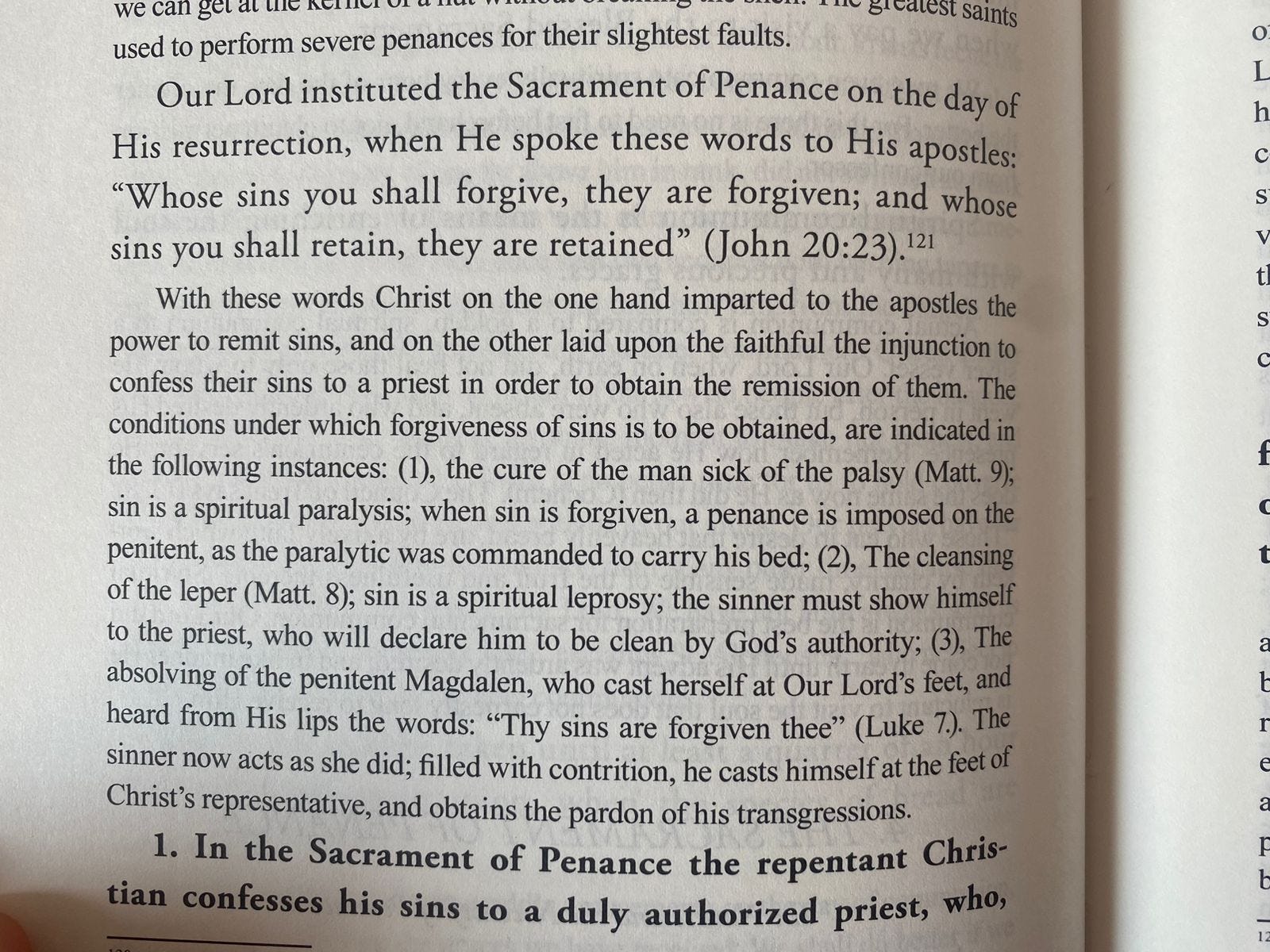
I understand that for those who might not be familiar with this Sacrament, it might be difficult to understand just how beneficial it is. For that reason, I’d like to explain the effects that confession has on the repentant soul who approaches this beautiful sacrament.
What Confession Actually Does (Practically)
Confession has absolutely changed my life. Even after becoming a Christian I still struggled with a lot of bad habits, and saw close to zero progress in getting rid of them. It was only after I made confession a regular practice that I truly started to break free.
Based on my own experience —and the teaching of the Church— here are the effects that the sacrament of reconciliation has on the sinner:
Verbalization of sins causes righteous shock: Sins thrive in the darkness. Even if we were to “just confess directly to God”, it’s easy to feel protected by anonymity and privacy at the hour of temptation. With confession, this changes completely. You are faced with the very uncomfortable situation of having to speak up and say visibly the sins you’ve committed, to a priest acting in persona Christi. The effect that verbal confession has on the sinner is that of shock and righteous shame, whereas when confessing “mentally”, it’s very easy to be comfortable and not realize the gravity of one’s offenses. When you say all the evil deeds you’ve committed, you realize they’re a real affront against God, which is something that doesn’t happen in a “mental” confession.
Confession increases accountability: If you confess to the same priest regularly, you will be more inclined to stop sinning, as you’ll be held accountable in a very real, tangible way.
Receive advice, absolution, and visible grace and forgiveness: Just like verbalizing your sins shocks you, receiving tangible, verbal forgiveness and absolution reassures you in a way that is unique to this sacrament. Additionally, we will often receive practical advice which can help us in our fight.
Disincentivizes further sin: Confession, especially at the beginning of your spiritual journey, is incredibly uncomfortable. It’s one of the hardest things to do, and that just goes to show how much easier it is to claim “I confess directly to God” to avoid the difficult act of sharing your sins openly. Confession has the very real effect of disincentivizing further sin by a very human mechanism: since confession requires effort, and it’s uncomfortable and difficult, at the hour of temptation, you’ll have an additional reason not to sin, and that is that you know you’ll have to make the effort to go to confession, talk to Christ through the confessor, and admit, again, that you’ve failed. When your version of confession is just a mental admittance of failure plus a possibly lukewarm asking for forgiveness, you miss out on the real effects that the sacrament of penance offers. Sin is a terrible offense, and often only in the sacrament of penance, when speaking it out loud, do we realize how ugly and hurtful it is.
Confession has been such a beautiful gift in my life, and I wish for everyone to experience what it’s like to leave the confessional feeling renewed, forgiven without a doubt, and motivated to keep pursuing holiness. When you experience, sacramentally and tangibly, the endless mercy of Our Lord, you will love Him all the more, and start hating the sin which separates you from Him.
The courage required to speak your sins out loud, combined with the humility necessary to accept the ecclesiastical path which Jesus devised for us is truly the most beautiful and efficient way in which we can grow in virtue and quit the vices that still enslave us.
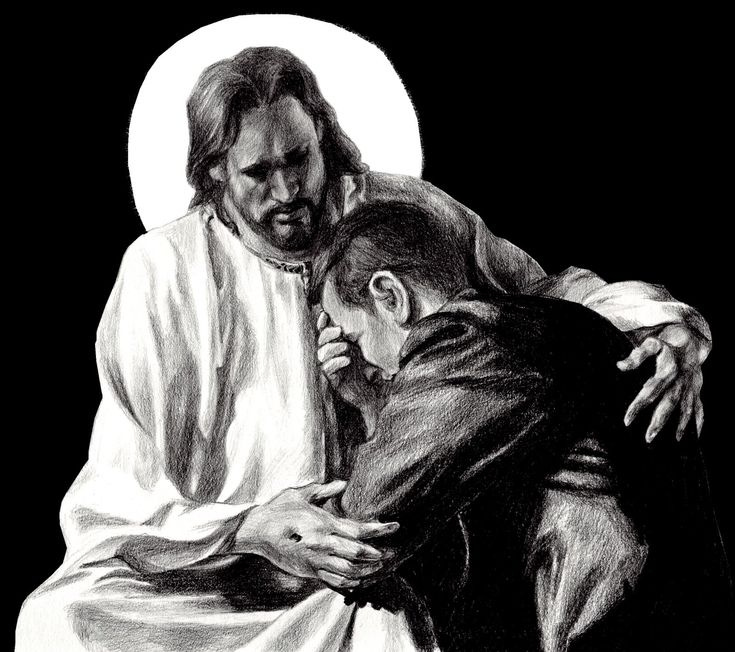
Confession, in short, is the perfect experience of the mercy with which God washes our sins away:
Though your sins are like scarlet, they shall be as white as snow;
though they are red like crimson, they shall become like wool.
— Isaiah 1:18
Additional Advice and Resources to Quit Bad Habits
I want to end on a practical note, and share with you some advice and resources on how to quit bad habits.
Confess frequently and after doing a thorough examination of conscience. The Catechism states: “According to the Church's command, ‘after having attained the age of discretion, each of the faithful is bound by an obligation faithfully to confess serious sins at least once a year."‘3
However, I would personally recommend confessing at least once per month, and more frequently than that, if you’re aware of grave sins. Remember that confession is something that also benefits you, not a mindless, arbitrary obligation.Read this article:
If you are struggling with p*rn addiction or other forms of sexual immorality, we have partnered up with Relay, a Christian men’s health platform specializing in helping men overcome p*rn addiction through Christian principles and evidence-based psychological practices. As a reader of Ad Aeternum, you can get an exclusive free trial by downloading the app here and using the code AETERNUM.

What once seemed unnecessary has become my lifeline to freedom, and I’ve seen firsthand how obedience to this divine gift yields profound peace and progress in holiness. Don't let misunderstandings hold you back: examine your conscience, find a priest, and step into the confessional today. Failing to do this is missing out on a moving, heart-changing experience of mercy.
God's words through His minister—"I absolve you"—will make you realize how His mercy can wash scarlet sins white as snow, drawing you ever closer to the heart of the Father.
Ad Maiora Nati Sumus,
Juan

Thank you for reading!
If you enjoyed this post and could leave a like or comment it would be greatly appreciated, as it will help my work reach more people.
If you liked this article, you’ll love my books.

CCC 1443
CCC 1486-1495
CCC 1457
Very well stated and absolutely the truth. A person returning to confession after a long absence will find the post to be a good stepping stone.
As a Roman Catholic convert, I found your article to be 100% accurate and resonated with me deeply (from my personal experience with confession). Although not mentioned, I prefer to confess behind the screen versus face-to-face. I do this not to remain anonymous to the priest, but to reinforce that I am confessing directly to God through his priest acting as you state “in persona Christi”. I picture Christ speaking to me from the other side of that confessional screen.