


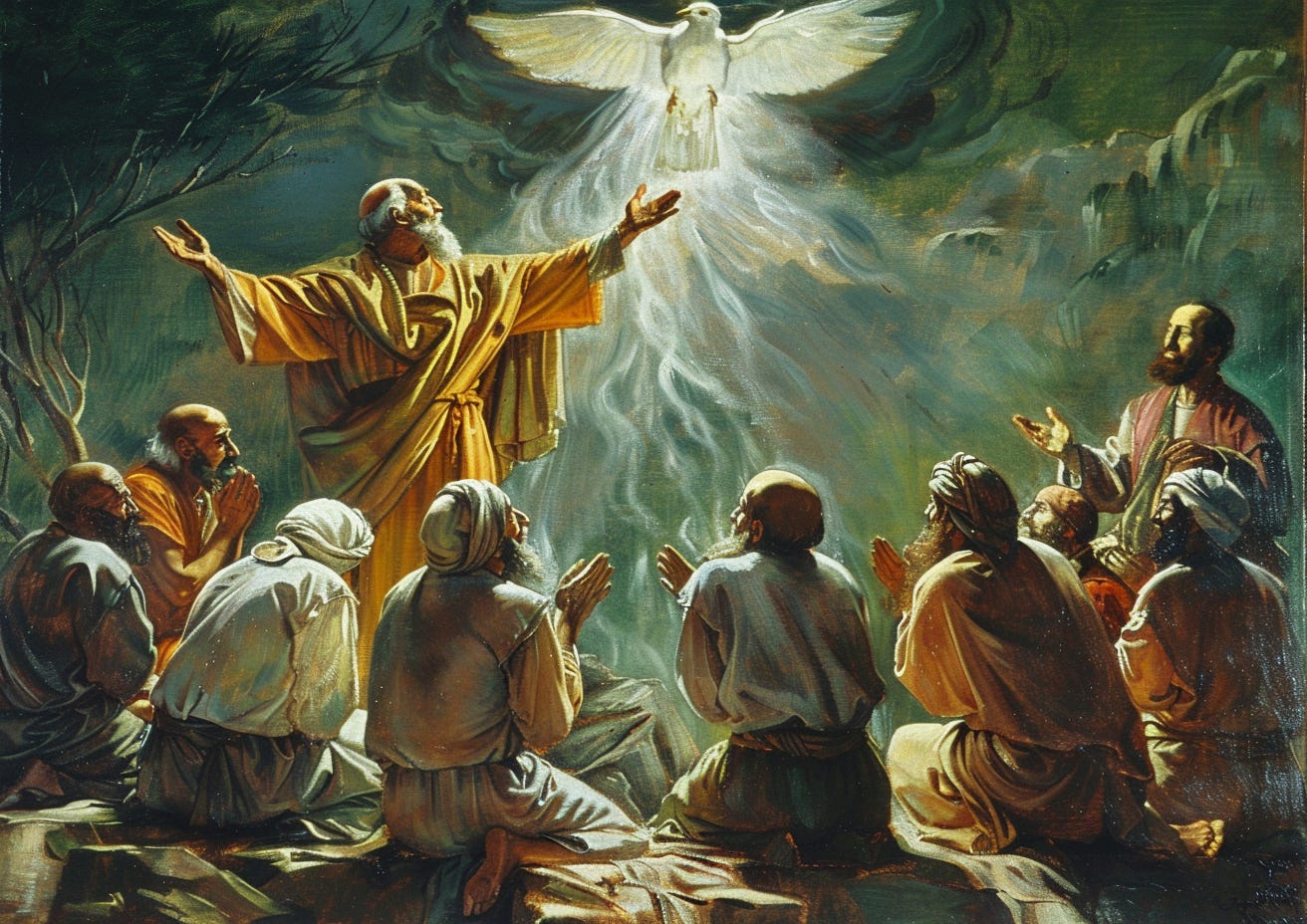
The 7 gifts of the Holy Spirit, according to Catholic tradition, are certain character traits that Jesus freely shares with members of His church. These traits are infused into every Christian as a permanent endowment at his baptism, are then nurtured by the practice of the seven virtues, and sealed in the sacrament of confirmation.
The 7 gifts of The Holy Spirit are also known as the sanctifying gifts of the Spirit, because by pursuing perfection in their practice, their recipients naturally become more receptive to the workings and promptings of the Holy Spirit in their lives, helping them grow in holiness and making them fit for heaven.
Whether you are Catholic or not, being aware of the 7 gifts can significantly strengthen your bond with God, and the practice of them in your personal life can help you grow into the man God wants you to become. So what are they?
There are multiple interpretations, so the following will be my own, based on multiple sources, but strongly influenced by the standard interpretation, which has been the one that St. Thomas Aquinas worked out in the thirteenth century in his Summa Theologiae.
Wisdom
Wisdom refers to the knowledge and judgement about divine matters, and the ability to apply them/put them into practice in day to day, human life. Wisdom is the capacity to understand the overarching truths of life and recognize how and when they can and should be used in the physical world. That means that a wise man is one who can relate the everyday situations of his life to deeper divine truths, and thus respond appropriately to the challenges he faces.
To develop the virtue of wisdom I recommend actively trying to relate the things that happen to you and those around you to the timeless lessons found in the Bible. This will require you to have the necessary discipline to study The Bible frequently, and the awareness to remember to view the situations of your life through the lens of the divine truths.
Understanding
Understanding, in this context, means seeing the deeper insights in the divine truths, especially those higher truths that are necessary for our eternal salvation. It’s the ability to “see” God and understand the meaning of Scripture and the sacraments. While this is very close to wisdom, it is different mainly in that understanding is more so a virtue of the rational or intellectual mind, whereas wisdom is more a virtue of the heart and soul.
Similarly to wisdom, to work on this virtue you can start studying scripture, history, and theology.
Counsel
Counsel is akin to a supernatural intuition that allows you to judge situations promptly and rightly. The gift of Counsel operates under the guidance of the Holy Spirit. In a more practical sense, counsel means that you can allow the Holy Spirit to instruct you and direct you in judging and deciding in your own life, and advising or helping others when they need it.
To practice the gift of counsel, it’s fundamental to focus first on the virtue of prudence: “Prudence is the first of the cardinal virtues because it is the ability to look at a concrete situation and know what ought to be done. It is the ability to make right judgments. Prudence gives us the knowledge of what must be done, when it must be done, and how it must be done.” 1
You should commend yourself to the Holy Spirit, and ask for His guidance, to lead you, work through you, act and speak through you, so that you can be guided by Him and be able to receive the gift of counsel and develop the virtue of prudence. Do this in prayer and do it frequently, before you act or decide and get into the habit of asking for prudence.
In the article below there’s a helpful prayer for this purpose that I’ve been using lately.
Try Praying Like This

In the battlefield of life, very often you’ll find yourself alone. Lost. As a man, very often you’ll feel unrewarded for the efforts that you are putting in, and sometimes you’ll have no sympathy fro…
Fortitude
Fortitude denotes the necessary strength of mind and spirit to do good and avoid evil, particularly when it is difficult or dangerous to do so. Fortitude also refers to possessing the confidence to maintain your faith intact throughout all obstacles, even deadly ones, by virtue of the assurance of everlasting life.
In your day to day life, you can practice fortitude by making sure you never let societal pressures make you renounce your beliefs. A man of fortitude is a man that is open about his faith, even when the world doesn’t appreciate or even approve of it. Make an effort to not hide your beliefs and you’ll start developing the fortitude that all God-fearing men can be blessed with.
Knowledge
Knowledge is the ability to acquire, analyze, and retain information for the purpose of judging matters of faith and right action correctly, so as to never wander from the straight path of justice.
To develop knowledge, take a scholarly approach to the study of the Bible and of Christian tradition, but also learn about the things that will help you grow in the in life on earth: philosophy, business, fitness, relationships. You are called to become a man of knowledge so you can put that knowledge to the service of your own ventures, but also, and most importantly, to the service of the people around you, to provide them with the necessary knowledge to aid them when necessary.
Piety
Piety is akin to obedience, reverence, and humility. It means, mainly, to revere God with filial affection, paying worship and duty to God, paying due duty to all men on account of their relationship to God, and honoring the saints and not contradicting Scripture. Piety is a virtue that reminds us that we belong to God fully, not to ourselves, and are thus called to honor, serve and obey Him in all we do.
Pope Francis explains piety to be "our belonging to God, our deep bond with him, a relationship that gives meaning to our whole life and keeps us resolute, in communion with him, even during the most difficult and troubled moments. Piety is not mere outward religiosity; it is that genuine religious spirit which makes us turn to the Father as his children and to grow in our love for others, seeing them as our brothers and sisters."
Piety can be practiced by making sure we make of time with God a priority in our lives. This helps us remember who we belong to, and why we are here in the first place. Something I’ve been doing, which also keeps me grounded and centered, and is based on Catholic tradition, is to avoid eating meat on Fridays, as well as taking cold showers and practicing other ascetic disciplines as little sacrifices in remembrance of Christ’s crucifixion and death on the cross. This ensures that even during the comings and goings of daily life, I remember the sacrifices of Our Savior and keeps me close to Him. While helpful, this is definitely not enough though, and you still need to build the discipline required to pray daily, study Scripture, and partake in the sacraments.
Fear of The Lord
This fear is “filial” or chaste fear whereby we are afraid of separating ourselves from Him—as opposed to “servile” or tyrannical fear, whereby we fear punishment or negative consequences. According to Aquinas, it’s more akin to a child’s fear of offending his father.
In the words of Pope Francis: “[this] is no servile fear, but rather a joyful awareness of God’s grandeur and a grateful realization that only in him do our hearts find true peace”. As I see it, it is also fear to misuse our lives by following false prophets instead of the one true God.
The fear of the LORD is the beginning of wisdom.
- Proverbs 9:10
Remembering the 7 gifts of the Holy Spirit will help you build a mental image of the kind of man you can be, for God, yourself, and other people in your life. These are virtues that Jesus Christ himself showed perfectly, and in our efforts to imitate Him, we should keep them in mind constantly.
Thank you for reading and God bless you! If you enjoyed this article, you’ll love my book.
https://www.catholicnewsagency.com/resource/55554/prudence