


One of the goals I have for 2026 is to be more intentional about how I dress. I don’t think I dress poorly in general, but I do think I tend to be a bit lazy when choosing the clothes I wear.
I’ve written before about the importance of our appearance, and I realized I hadn’t been taking my own advice seriously, which is why I decided that next year I’ll invest in some nice clothes and be more mindful about choosing outfits that properly communicate what I want them to communicate.
However, I’ve noticed that whenever I say that you should care about your appearance, there’s usually some who say that caring about how you look is vain and sinful. And I can’t say I don’t see their point: there’s a fine line between trying to look presentable and having a disordered attachment to looking “hot” and “pretty”. For that reason, I decided to write this article and dive a bit deeper into why you should in fact care about how you dress, and why it’s not necessarily vain to do so.
There is a difference between vanity, which is a disordered obsession with appearance for pride or to glorify yourself, and stewardship, which is about presenting yourself well out of respect for God, others, and your calling.
As with anything else, the correct approach to dressing well lies somewhere in the middle: you don’t want to be someone who cares too much about your appearance, but you also don’t want to be someone who cares too little about it.
Because whether we like it or not, how we dress signals who we are inside. Slouchy dress signals slouchy character. The way you present yourself communicates volumes about your self-respect, discipline, and how seriously you take your responsibilities. When you dress like you’ve given up, people assume you have.


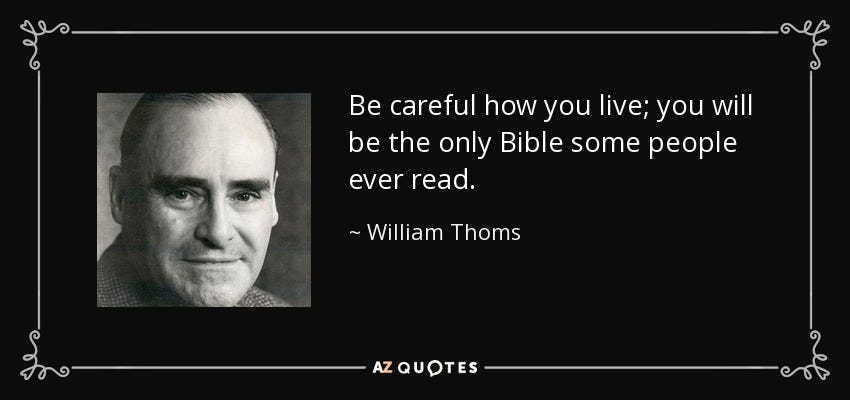
“Don’t Judge a Book by Its Cover”
We’ve been told that we shouldn’t “judge” others by their appearance, and that what truly matters is on the inside. And even though this comes from a place of charity —and it’s fundamentally correct— we cannot forget that who we are inside is inseparable from how we present ourselves.
The cover of a book literally signals what’s written in the pages, and the outward appearance of a man literally showcases the values that he lives by.
The world sees who you are inside in your posture, style, and overall appearance. Your vices, and similarly, your virtues, will externalize themselves on your appearance.
As Catholic men, we claim to follow all that’s good, true, and beautiful. It’s only logical, then, that we should aim to order our lives so that everything about them reflects those values, including the way we dress.
Your Appearance Affects Your Leadership
It’s also undeniably true that whether we like it or not, the way we present ourselves has a direct impact on how others perceive us. And how others perceive us has a direct effect on how effective our leadership is across all areas of life:
Leadership at work: Promotions and opportunities go to men who look competent. You can argue about whether it’s fair or not, but people will judge your professionalism by how you present yourself. Dressing well signals attention to detail, self-discipline and preparedness.
Leadership at home: Your wife notices when you’ve let yourself go. She won’t say it, but slovenly appearance signals you’ve stopped trying, stopped competing and checked out altogether. Dressing well shows you still care about being attractive and respectable to her. As the leader of your household, how you look will have an impact on your family too.
Leadership in public: As a Catholic man, you represent Christ everywhere you go. Your appearance opens or closes doors for witness, and your clothing can either help your evangelization efforts or hinder them. Looking sharp vs. sloppy changes how people receive your words about faith.
Dressing well is not just relevant for abstract reasons (like signaling our commitment to higher values), but even more so for practical ones: your clothing can either help you move forward, or hold you back as a man.
The Catholic Tradition of Sacred Dress
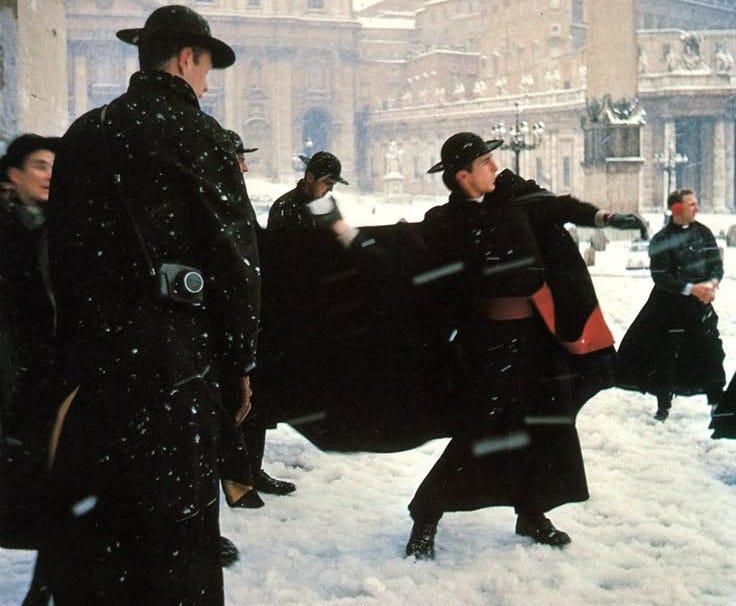
The Catholic Church has always understood that clothing matters. Priests, for example, dress distinctively to signal their sacred office and set themselves apart for holy work. The cassock, the collar, the liturgical vestments. All of these garments communicate something important: this man has a specific role and calling that requires appropriate dress.


As laymen, we have our own uniform requirements. We’re called to transform the secular world, which means looking like men who belong in it while maintaining our distinctiveness as Christians.
Our “vestments” are professional dress, well-kept appearance, and intentional presentation that commands respect and leadership in both the private and public square.
Just like the priest’s collar signals his office, your sharp, intentional, classy dress signals yours as a man of purpose, discipline, and dignity operating in the world for Christ’s kingdom.
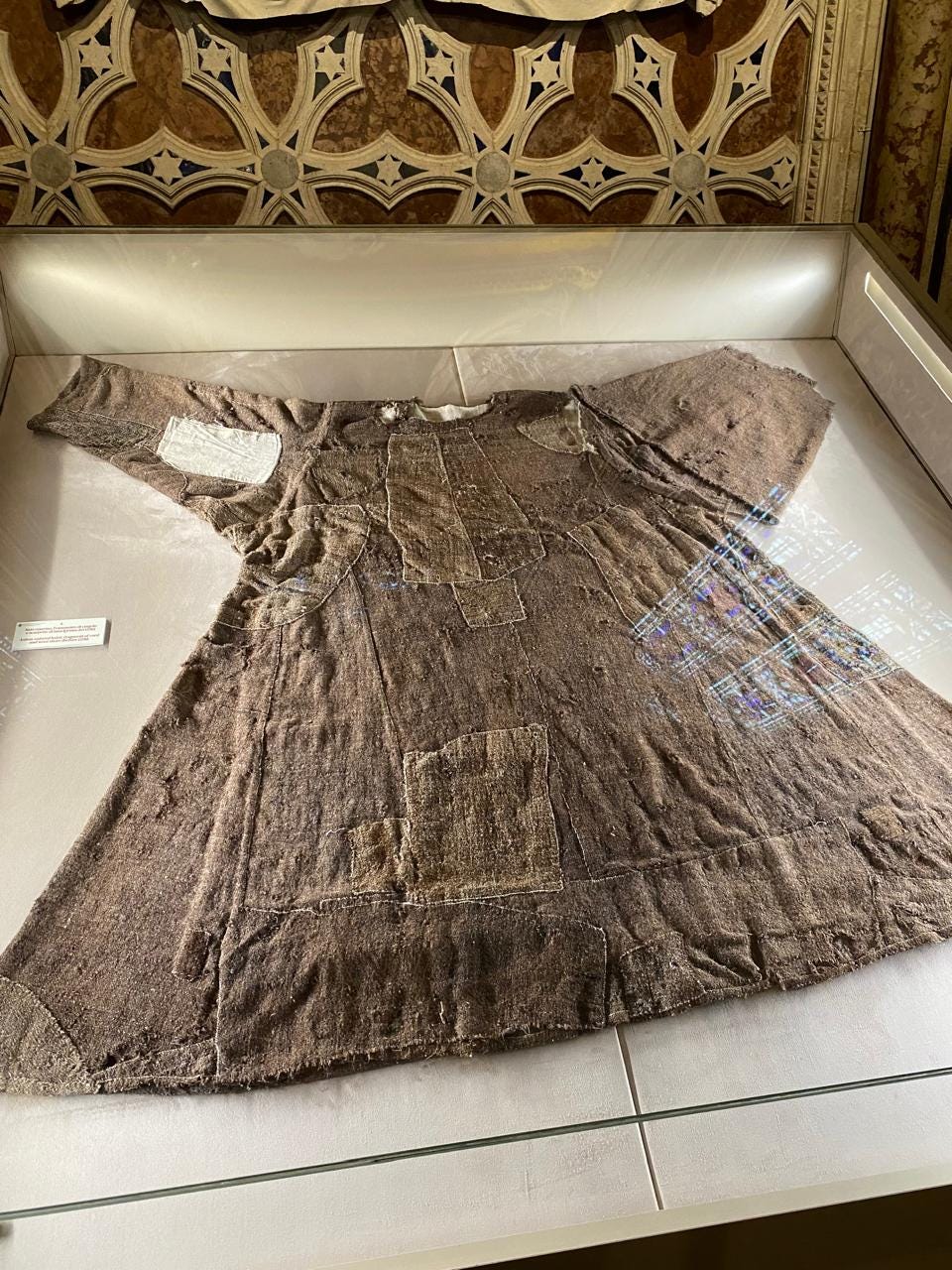
There’s a caveat here, and one which I imagine many could use as an objection to this article: what about those who’ve taken vows of poverty? What about St. Francis and all the other saints who’ve detached from the world so completely that they wore ragged, dirty clothes?
The Exception That Proves the Rule
Pointing to St. Francis and other saints who embraced radical poverty, wearing rags and owning nothing is a legitimate objection, but it misses a crucial distinction: those saints took explicit vows of poverty as part of their religious calling.
St. Francis dressed in rags as a deliberate witness to evangelical poverty and total dependence on God, because that was his specific mission and charism.
As laymen, our calling is different. We’re not called to monastic poverty but to sanctify the ordinary world through our work, families, and public witness. Our evangelization happens in offices, homes, and communities where appearance matters for effectiveness. The businessman evangelizes differently than the mendicant friar. Your mission requires you to be taken seriously in contexts where St. Francis’s rags would close doors instead of opening them.
Even within religious orders, there’s recognition of this principle: Jesuits dress differently than Franciscans because their missions differ. Your mission as a Catholic layman in the world requires presentation that opens doors for the Gospel.
Basic Principles of Style for Catholic Men
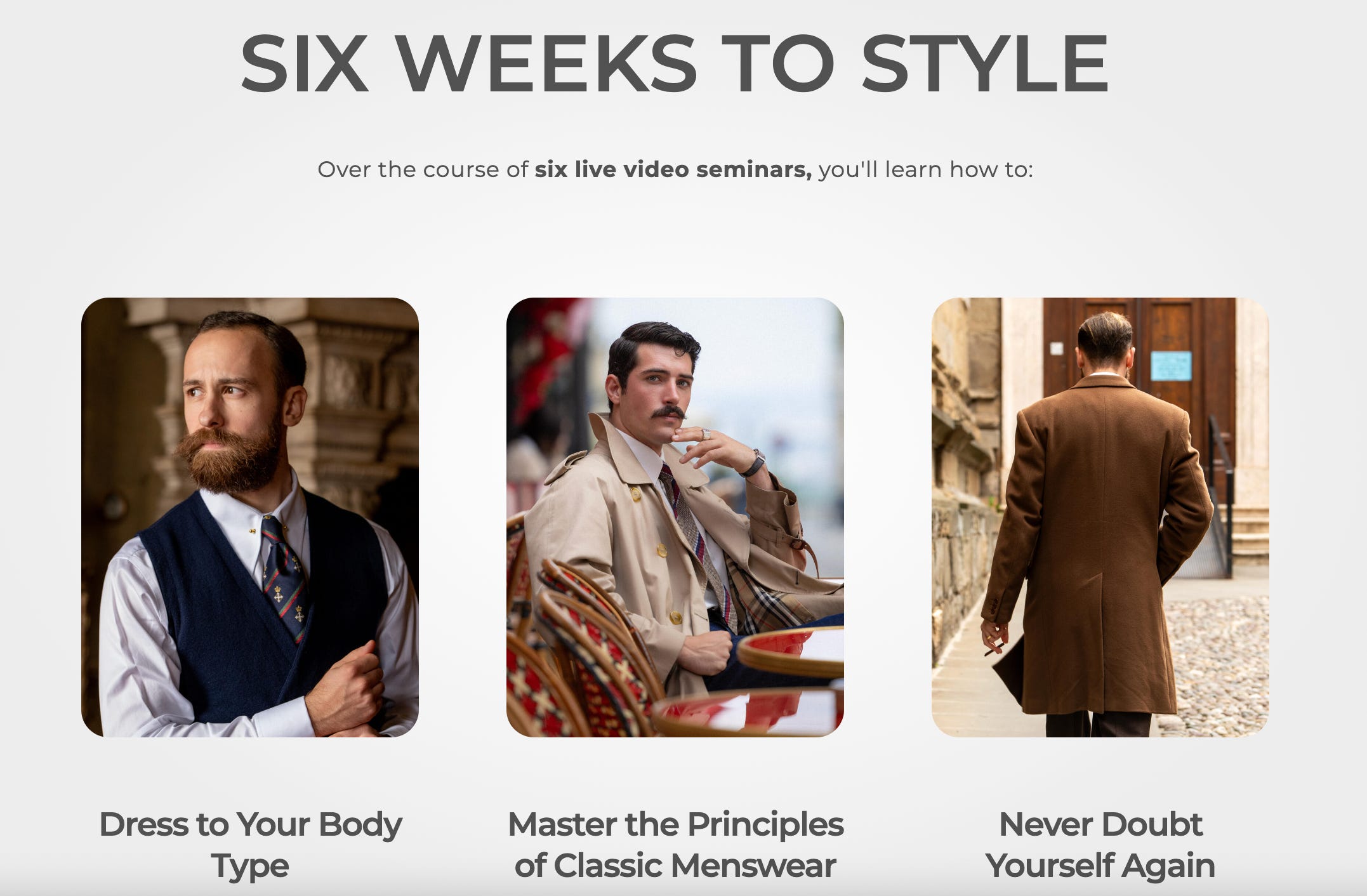
I’ll keep this section short and simple, as I’m not an expert. If you’re looking for more in-depth advice, I recommend you subscribe to Letters from the Old World by my friend Evan Amato, and that you sign up for Six Weeks to Style, a 6-week seminar created for men who want to learn to dress better.
Here’s some simple yet highly effective advice regarding how to dress better:
Fit matters most: Your clothes should fit your actual body, not the body you wish you had.
Think about the context: Each activity has its own standard. Your clothes for Mass shouldn’t be the same as your work clothes or your casual clothes.
Quality over quantity: A few good pieces are always better than lots of cheap ones.
Grooming comes first: Your clothes matter next to nothing if you look dirty and poorly groomed. Get a decent haircut, take care of your facial hair and polish your shoes.
Intentionality over trends and brands: Dress for your life and calling, and be intentional about what you wear. Don’t worry about brands and “Instagram aesthetics”. Dress genuinely and with a clear purpose.
A Final Recommendation
I wanted to quickly expand on the course I recommended earlier, Six Weeks to Style, and why I believe you should consider joining if you, like me, feel like you need some guidance with this topic.
As I said at the very beginning of this piece, one of my goals for 2026 is to start dressing better and to invest at least a bit into that purpose. God has been incredibly providential and generous with me during this year, and He’s led me to positions—both professionally and personally—of significant influence. I realized that if I wanted to make the most of the opportunities that God had sent my way (and also increase the chances of receiving more of such opportunities in the future), I should be more intentional about the way I dressed.
Providentially, my friend Evan from The Culturist is launching his course Six Weeks to Style early next year, comprised of six live seminars created to help men master the art of permanent style without needing to break the bank in new clothes. So if you, like me, think it’s important to dress like a man of stature, I highly recommend you check it out and reserve a spot. I believe this is an investment which might bring you an invaluable return across all areas of your life.
I hope this article helps you and motivates you to start being more intentional about how you dress. The world needs men who take their calling seriously, and who understand that these details make all the difference when it comes to reviving our culture.
God bless you and let me know what you think about this topic in the comments,
Juan
Thank you for reading!
If you enjoyed this post and could leave a like or comment it would be greatly appreciated, as it will help my work reach more people.
If you liked this article, you’ll love my books.

Agreed 👍🏾
Fabulous article. Check out the Italian concept of “sprezzatura.” It’s a masterliness that doesn’t draw attention to itself, and it’s part of the order of charity and grace.
No ugly sweaters for Christmas.