



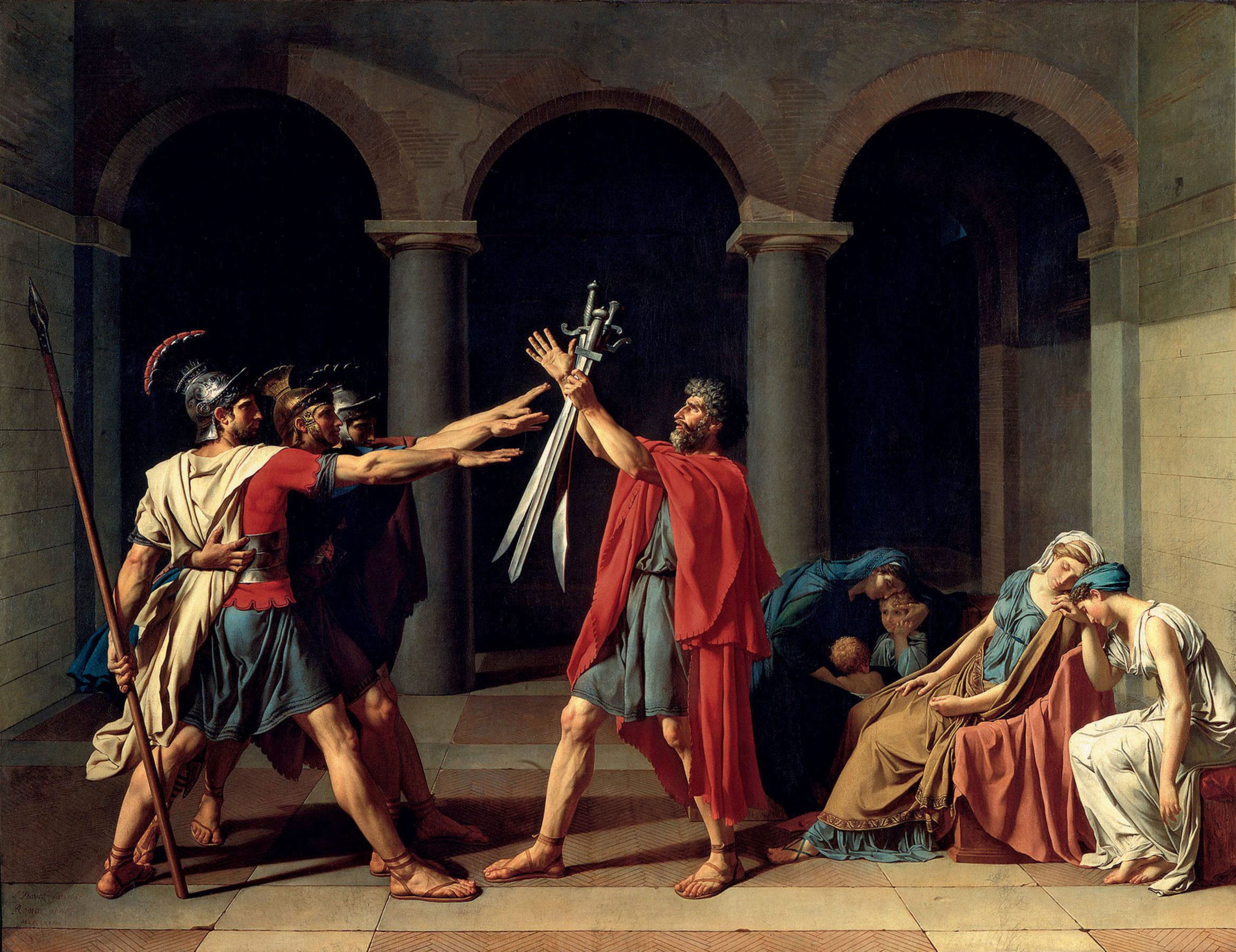
In a modern world that seeks to strip men of nearly all virtues, there is one specific quality which seems to be almost completely absent.
It’s the virtue that gives a man weight, conviction, solemnity, and integrity. The average man exists on a superficial level, occupied with useless facts, focused on entertainment, celebrities, politics, news that don’t affect him, or simply too caught up in the hustle of day to day life to ever leave the surface. This man ends up treating everything with the same register of casual levity, speaking words that carry no weight and shifting his positions casually, almost involuntarily, depending on whoever he last spoke to.
In this ocean of lightness, the mere presence of a grave man causes discomfort and awe, sparking both envy and a hunger to possess such seemingly natural poise and influence. That’s a man who has the virtue of gravitas, whose interior depth becomes visible in his presence.
What Is Gravitas?

In the Roman world, gravitas was one of the core virtues of the aristocratic ideal alongside severitas, pietas, and virtus. It meant weight, the quality of a man whose words and presence carried natural authority because he himself was deeply rooted on something bigger.
A man of gravitas was not someone who made an effort to try and seem serious and solemn, but someone who, because of his interior depth, simply was serious, composed, and grave (in the best possible way).
Many mistakenly think that gravitas is sullenness or being joyless all the time, and some others mistakenly think that gravitas is the pomposity of the man who performs seriousness to try and look cooler. True gravitas is neither. True gravitas is the natural outward expression of a man who has developed interior depth and is thus not easily swayed by the surface turbulence of the world around him.
The Baptism of Gravitas
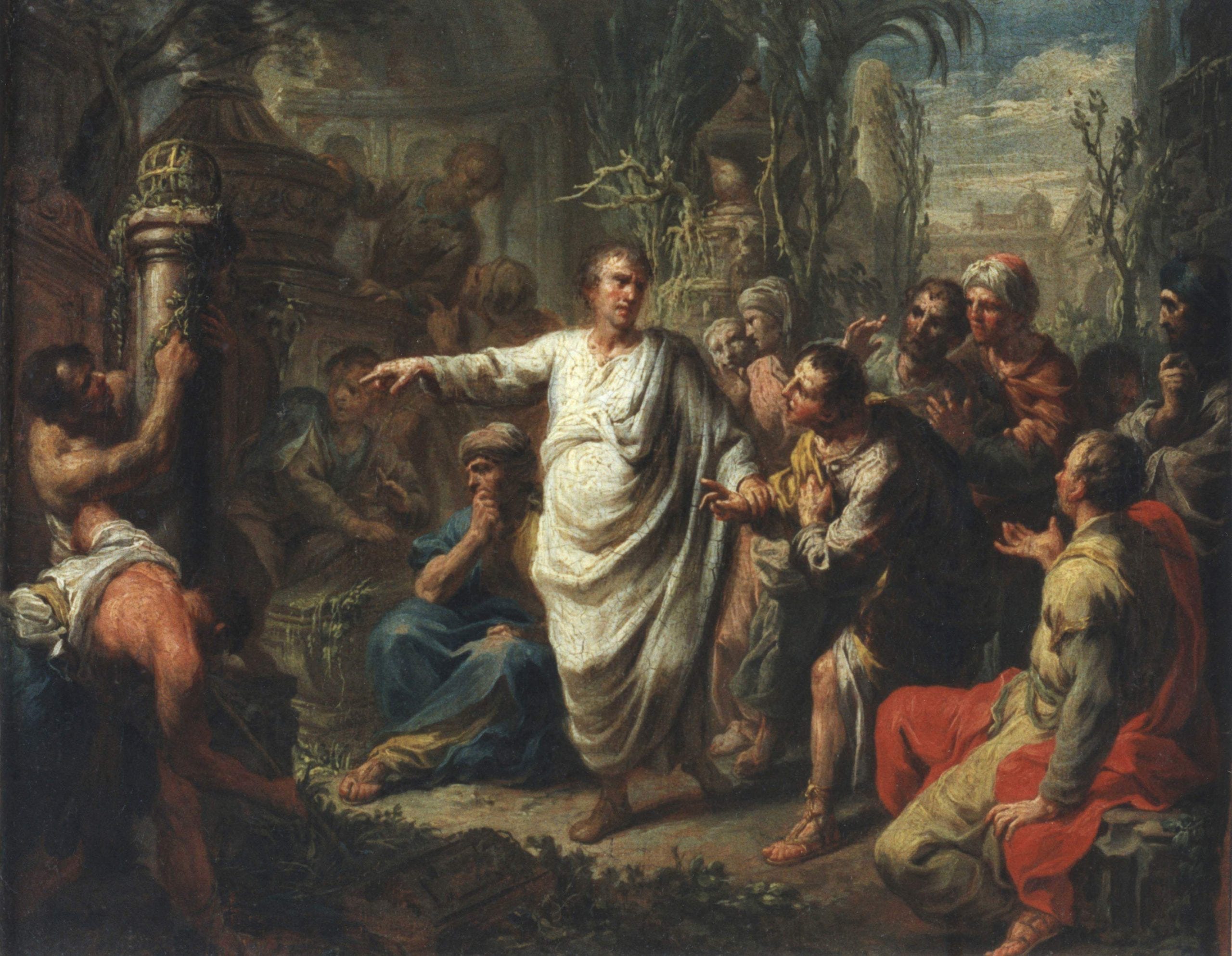
As is the case with most Roman virtues, the early Christians did not simply reject them, recognizing their intrinsic value, but they did reorder them, also understanding that a virtue expressed in a pagan environment could easily be misunderstood and sought for all the wrong reasons. In ancient Rome, gravitas was ordered toward social authority, political influence, and pursued for prideful reasons (power, praise, etc).
The Christian tradition kept the substance but redirected the foundation: a man of Christian gravitas should carry weight not because of his status or achievements but because he is grounded in something solid, eternal, and unmovable: Truth.
This is reflected in St. Paul’s instruction to Titus:
“In all things shew thyself an example of good works, in doctrine, in integrity, in gravity.”
— Titus 2:7
In the original Greek, the word used is semnotes, which translates to gravitas: dignity, moral seriousness, weightiness.
As we can see, the Church has always understood that there’s a virtue which imbues certain men with an authority that can only come from the seriousness and depth of their character. That is gravitas.

What We Lose When We Lose This Virtue
I believe that there are three main forces that have specifically eroded gravitas in modern men.
First, the entertainment industry, which undoubtedly rewards levity, relatability, and the performance of casualness. Under the influence of Hollywood, seriousness becomes systematically penalized. Think about it: all modern movies or TV shows always try to include some form of “comic release” to avoid presenting situations as truly grave. Watch modern movies long enough and you’ll slowly start to act like the characters portrayed on screen.
Second, the therapeutic culture pushes for unrestrained emotional expression as the highest form of authenticity. What naturally follows is that we become convinced that our emotions are the source of truth, and slowly start to believe that interiority and restraint are forms of harmful repression.
Finally, the disappearance of rites of passage into manhood has left us with a vacuum of formation in which men never learn how to approach life with a weighty, solemn spirit.
The cultural consequences of these influences are dire, and we are seeing them play out in real time: men no longer have any authority in their own households, fathers are not capable of correcting and being taken seriously, and Christian men cannot speak the truth with authority, as Christ did and instructed us.
It’s absolutely imperative that we become men of authority again, and that we learn to speak with conviction, so that we can communicate the Truth effectively and make other masculine men capable of doing the same. Recovering gravitas can be done through four concrete practices you can start doing right now: