




If you’re on Twitter, you probably came across this viral post sometime last week:
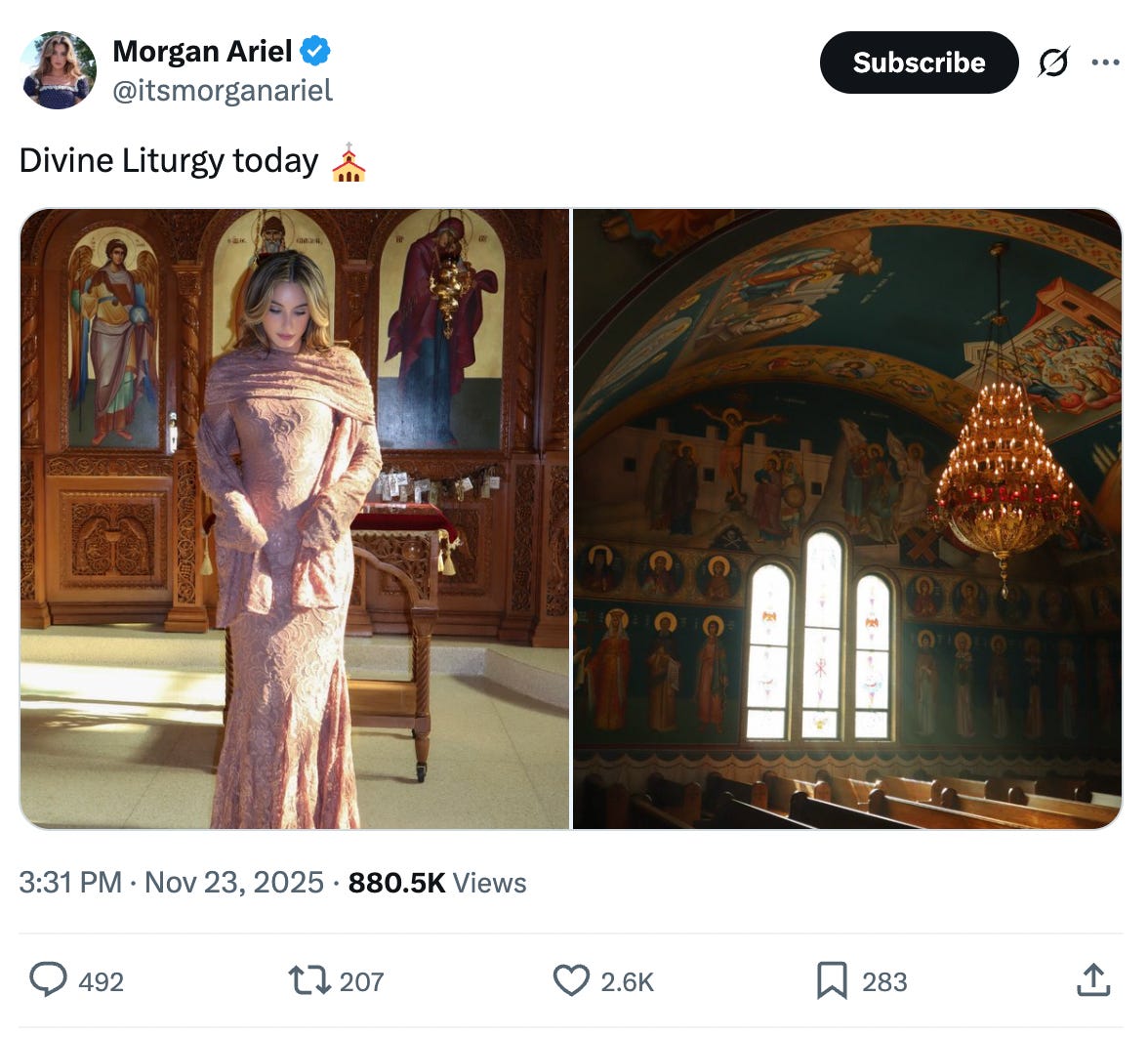
Morgan Ariel’s post sparked a lot of controversy in the Catholic and Orthodox Twitter spheres, with many rushing to criticize her and others rushing to defend her.
Her strongest critics called her out for “immodesty” and “attention-seeking,” while her most avid defenders told her to “keep doing your own thang babe” and to “ignore the haters”.
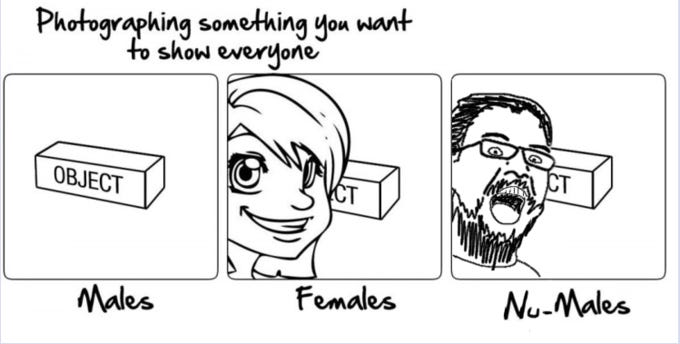
I personally think both camps are missing the point. Most critics fail in giving a loving, charitable correction, and most defenders ignore the fact that there might be some loving correction needed.
I don’t intend to pile on the negativity that this woman is receiving, because I don’t know her heart or her intentions. I think the correct response to such a post would be to point out, lovingly, that it might be more appropriate to avoid taking pictures in Church.
It’s not that taking pictures of yourself in Church is a sin, but doing so can very easily lead to a disorder in which the motivation behind what could be genuine acts of piety and faith stops being to love and honor God, and starts being to receive praise, recognition, validation, or social approval. A big point in Christian life is to decrease so that Christ can increase:
He must increase, but I must decrease.
— John 3:30
Taking pictures like the one above makes it too much about ourselves. Could she have taken a picture of the icons without herself in it? What would she have lost if she did? Therein lies the problem: she didn’t need to be in there to show what she supposedly wanted to show.
But Morgan Ariel’s case is not the main point of this article. The reason I wanted to start this piece by commenting on that particular post is that I see it as a symptom of a wider problem, and due to its recency and virality, it serves as a good introduction to my broader point.
A Deeper Problem
As I said above, this isn’t about one woman’s photo, but about an entire generation that has been shaped by attention-seeking behaviors.
All of us who are active on social media have probably felt it at some point: the urge to document, to perform, to make everything “content” in the hopes of “going viral”, making income from attention, gaining social validation, and becoming “famous”.
This phenomenon has infected even our sacred spaces and spiritual practices, with Morgan Ariel’s post being just an example, and not even one of the worst ones. We’re now constantly trying to make our lives into content, hiding behind the excuse of “building a personal brand” to justify our desperate need for attention and the dopamine that social media offers.
This is a natural consequence of the economy of attention.
In our digital age, attention has literally become currency to be accumulated, traded, and spent. We’re living in what sociologist Georg Franck calls “the economy of attention,” where likes, views, and followers function exactly like money in our pockets (van Krieken, 2018).
If you’ve been online for a while, you have surely seen the economy of attention in action. Millions of people desperately trying to become “influencers”, trading their dignity, privacy, and authenticity for viral moments and followers.
The incentives of this economy are brutally simple: the more extreme, outrageous, or ridiculous your content, the more attention you receive, and therefore the more “valuable” you become in this bizarre marketplace.
Influencers do increasingly degrading things: humiliating themselves, exploiting their children, faking illnesses, staging breakups, all for the currency of attention.


People film tragedies instead of helping victims because the video is worth more to them than the person suffering; they film themselves crying to get views; they vulgarize their behavior completely to attract eyeballs. And on and on it goes, each post more ridiculous than the last, each influencer more unhinged and each video more extreme.
The fundamental human desire for recognition has been weaponized into an economic system where everyone is incentivized to become a celebrity, to build a personal brand, to turn every moment of their lives (even the sacred ones, as the case at the beginning of this article), into content.
We’ve created a world where your attention-capital determines your value, and the pursuit of it corrupts everything it touches, including our relationship with God and others. It’s very difficult to be present and to act out of love of God —the purest of intentions— if we’re constantly posting our lives online and getting dopamine (and monetary) rewards for it.
This leads to millions of people “living for the gram”, acting only insofar as they can turn their actions into content, selling their souls for attention and caring only about the approval of the algorithm.
For many, it doesn’t matter how much they debase themselves, how much they humiliate themselves, as long as their video goes “viral”.
Selling Your Soul for Attention
The Millennial/Gen Z Cringe Epidemic
You’ve probably come across some of the “millennial cringe” compilations, but in case you haven’t, here’s a painful example of them:
“Millennial cringe” refers to videos like the one above, where grown men and women engage in embarrassing, overly-performative behavior created as desperate attempts for virality. These are not just “quirky and fun” videos, but clear examples of just how many people willingly turn themselves into clowns just to get some attention.
Awkward dances, forced enthusiasm, staged “relatable” moments, and exaggerated reactions, it all feels uncomfortable to watch because the desperation for validation is so transparent, and because deep down we know that adults shouldn’t act like this.
We know adults should live for something higher, carry themselves with dignity and with a degree of seriousness. This does not mean that a genuine sense of humor isn’t a desirable trait, but rather that humor should emerge naturally from authentic joy and wit, not from debasing yourself for strangers’ approval or performing manufactured personality quirks designed to attract likes and follows.
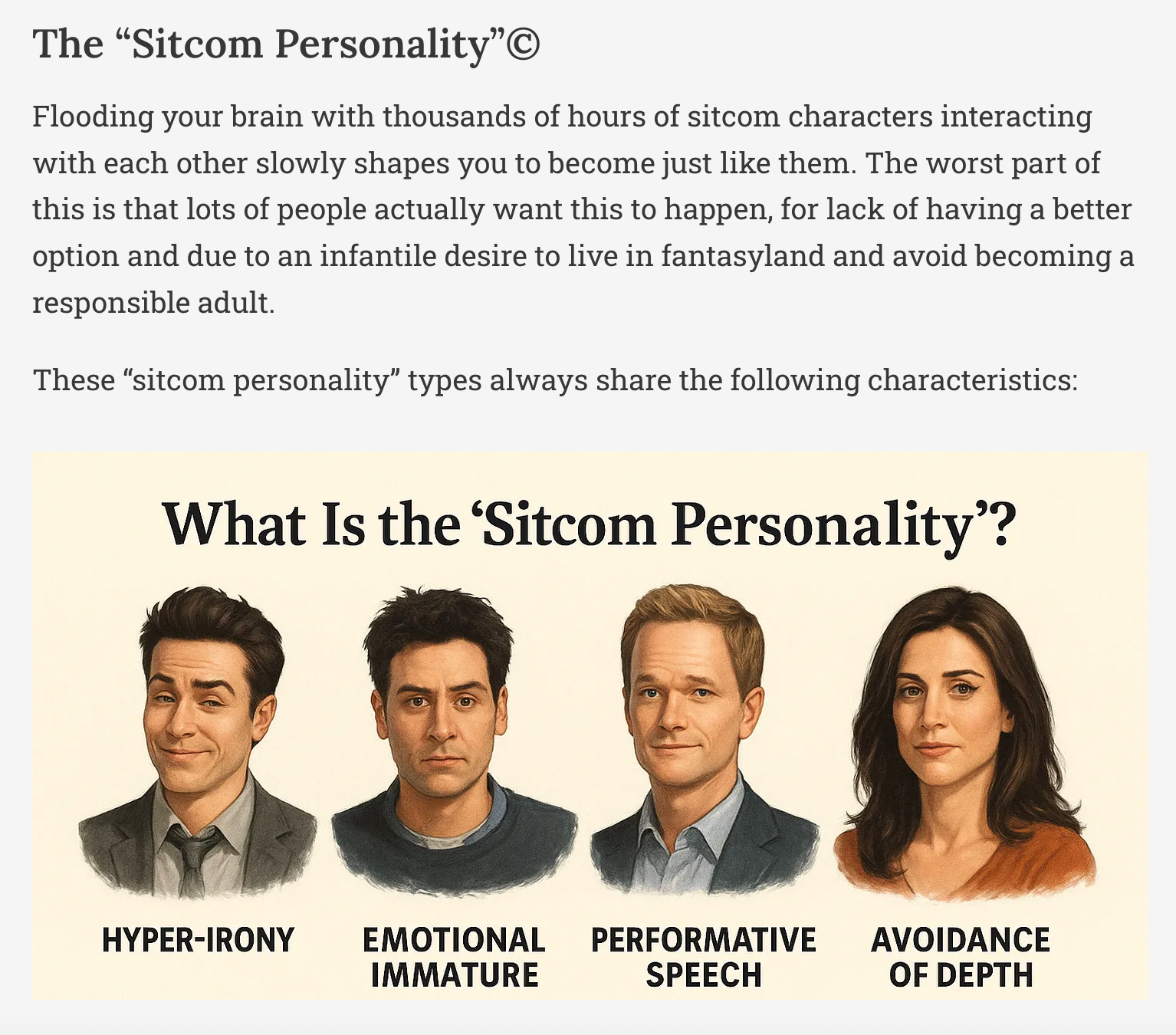
Our generation suffers from the virus of performance. It’s the sitcom personality all over again, only this time it’s elevated to the thousandth power, because now there actually is an audience and we have turned our entire lives into a show.
These desperate bids for attention now remain forever in the record, so that even when we, God-willing, move on and attempt to live a more private life, our past cringe comes back to haunt us.
How This Affects Us Spiritually
Some might claim that I’m exaggerating, but this is not a minor problem, mainly for one reason: attention-seeking corrupts intention. When everything we do is a performance, it becomes increasingly difficult to die to ourselves, remove ourselves from the center of the picture, and try to do what’s pleasing to The Lord out of pure love for Him.
It’s the difference between “He must increase, but I must decrease.” (John 3:30), and “Look at me being holy”, between “Jesus Christ, Son of God, have mercy on me, a sinner", and the Pharisees praying on street corners.
There is no interior life to be had when everything —even attending Divine Liturgy or Holy Mass— is externalized for content. When all virtue becomes performative, the intention behind the pursuit of virtue becomes poisoned, self-centered, and twisted.
The point is that it shouldn’t be about ourselves. And we are failing miserably at the whole “decreasing so that Christ increases” thing. We’re deeply addicted to the dopamine hit of notifications and likes, endlessly trapped in comparison, and terribly afraid of irrelevance, especially nowadays when attention means money.
What We Are Quickly Losing
Again, beyond the spiritual problems that arise from these behaviors, there are also psychological and social consequences: we’re becoming increasingly unable to be present in important moments, instantly pulling out our phones and thinking “how can I turn this into content”?
Our relationships suffer as we get used to seeing everyone as a member of our audience, instead of, again, removing ourselves from center stage and seeing others as equals under Christ.
This all leads to a terribly sad loss of our authentic selves because we see ourselves only in relationship to others. Our worth and our very being become invisible when no one’s watching, so we end up quickly running back to the black screens where we can be someone again.
The economy of attention has hurt us all, deeply. But as always, there is a way forward, and as always, it involves more surrender, more prayer, more introspection, and more dying to ourselves.
The Way Forward
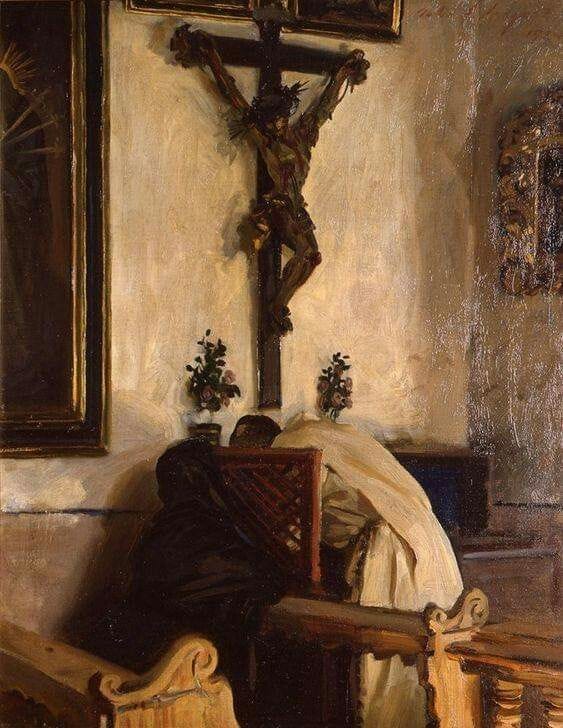
Action follows intention but the opposite is also true: intention follows action. What this means is that a virtue —even a forced virtue— serves to purify your intention. Start acting modestly —stop posting selfies in church, quit performing your piety for an audience— and you’ll discover something: the outward discipline gradually transforms your inner motivations.
You don’t need to wait until you “feel” the right way; simply stop doing the wrong thing, and your heart will catch up, provided you continuously ask God to transform your heart in prayer.
But when you give alms, do not let your left hand know what your right hand is doing.
— Matthew 6:3
I anticipate a valid criticism that might come my way here: “You make a living from social media. Aren’t you part of the problem?” Fair point. I’m guilty of the same temptations I’m describing. But it’s precisely because I’ve been in this game for years that I’ve seen how dangerous it is.
I’ve watched the attention economy corrupt good people, and I’ve felt its pull on my own soul. That’s why I’ve had to make very deliberate choices, which have served me well and might serve you too: no personal brand, minimal photos of myself, content focused on ideas rather than personality. I’m not claiming complete success, because I’ve failed at this many times, and probably will keep failing, as it’s a permanent battle.
I’ve been tempted to build around my name and face, to capitalize on the profit potential of “personal branding.” Thankfully, those plans never materialized, and in hindsight, I know pride would have destroyed me if they had. The struggle to make content about Christ rather than yourself never ends, but making it less about me and practicing a kind of “hiddenness” in the way I post online has protected my soul, and maybe that’s the real metric that matters.
This article is getting long enough, so before I leave you, I’d just like to give you some practical recommendations to start detaching yourself from the economy of attention. These are all things I’ve learned after some years being chronically online, and they’ve made a huge difference in keeping me somewhat protected from the sometimes inescapable grasp of attention-seeking behavior.
Practical Suggestions:
Digital Sabbath: One day per week completely offline. I do this on Sundays. No social media, phone just for texting. You can take it to the next level and remove screens altogether for one day a week. This is incredibly healthy for your soul.
Do Good in Silence: When doing charitable acts, or good things, try to resist the urge to take photos and tell people about it. Do not post it on social media. Do it for The Lord and only for Him. As explained earlier, this will slowly start to purify your intentions.
Content Audit: Before posting anything, ask “Why am I sharing this? Who is this really for?” Nine times out of ten, you’ll realize your motivation is not as pure as you’d like it to be.
Flee the Metrics: Turn off notifications, avoid constantly checking view counts, uninstall apps that have you addicted, and break the feedback loop any way you can.
Use App Blockers: I’ve been using one to block all social media outside of my working hours, and it’s been massively helpful. The less you’re online, the more you’ll restore your true identity and detach your worth and fulfillment from the social media algorithms. I’m using a free app called ScreenZen, but there are plenty of options for both Iphone and Android.
Choose Your Audience
The questions you need to be asking yourself are:
“Who am I performing for? God or the algorithms? God or strangers online?”
The beauty of knowing the love of God is that everything else pales in comparison to it. No amount of digital attention will ever replace a true relationship with God, and that is what we should be seeking.
We need to remember that our identity comes from Him, not from anything else, least of all from strangers online. Only thus will we have enough strength to reject the temptations that the online world offers, and truly truly find it in our hearts to do the right things for the right reasons.
God’s opinion is the only one that matters. When you grasp that in its entirety, you’ll stop wanting the cheap attention that will often require you to degrade yourself or sell your soul completely.
The irony of it all is that true, lasting influence, which many of us believe will come from virality, comes only from holiness, and that holiness requires us to make it about Christ, not about ourselves. The humblest, most modest of believers are those who have changed the history of the world, and more importantly, are now enjoying eternity in the presence of Our Lord.
They found holiness and freedom in hiddenness, in extreme humility, in dying daily to let Christ shine through them.
Let us look only to God for His approval, and seek the freedom of hiddenness instead of the slavery and suffering of constant visibility, of performance, of being center stage and showcasing the world just how virtuous we are.
Remember that the most important things you do, no one will ever see. And that’s exactly the point.
Thank you for reading!
If you enjoyed this post and could leave a like or comment it would be greatly appreciated, as it will help my work reach more people.
If you liked this article, you’ll love my books.

Great article.
Second time I read it. Love your work! Keep up!
As I was reading through this I thought of why I decide to post my content and just use words. I don't want to expose too much of myself and the life I have, which is why the only content I write and share is words on a page. I was glad to read that you also mentioned this in your article. Really interesting read!
What starts off as something we do for ourselves - take writing - can quickly transform into something you do for other people because you're too focused on appeasing the algorithm and getting more eyeballs on your content.
I guess it's a fine line, and a decision you must make if you're running a business or writing for enjoyment (as I do).
Thanks for your insights, really enjoy reading your work. God bless you!