



Most of us have started and quit more things than we can count: training programs, prayer routines, diets, business ideas. The same pattern repeats incessantly: we come up with a new project or idea, begin full of motivation, and then we just can’t get ourselves to follow through.
You’ve probably seen this happen in your own life, how as soon as you sit down to work, pray, or study, you find yourself — within minutes — with an overwhelming conviction that you should be somewhere else. You start thinking that the work is pointless. That everyone around you is irritating. That somewhere else, something more useful or more meaningful is waiting. That you are wasting your time here when you could be doing something better elsewhere.
The diagnosis that the modern world offers is that you simply lack discipline. But the truth is that there is a spiritual component to this phenomenon of restlessness, and there’s a fifth-century monk who identified it, analyzed it, and devised strategies to defeat it.
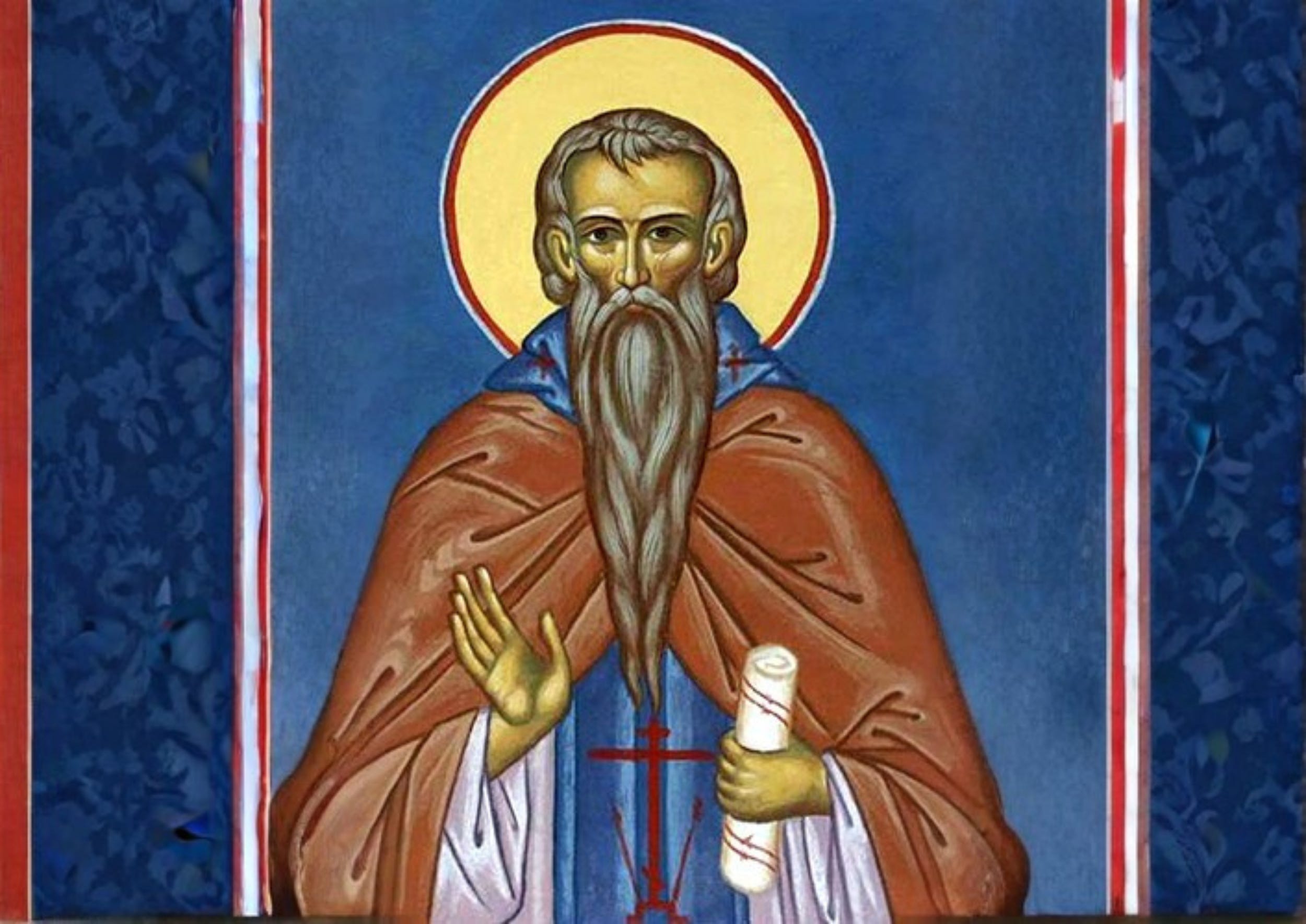
Who Was John Cassian?
John Cassian was a monk and theologian who spent his formative years living among the Desert Fathers of Egypt and Palestine, learning firsthand from the great ascetics who had made the harshness of the desert the center of their spiritual life. Eventually he made his way west, founding two monasteries in Marseille around 415 AD1, and he would then spend the rest of his life translating what he had learned in the deserts of the East into a form that the Latin Church could use. The result was the Institutes and the Conferences, two of the most in depth and practical documents on the interior life ever written. It’s in large part thanks to John Cassian that the wisdom of the Egyptian desert reached the Latin West.
Even Saints of great renown like Saint Benedict of Nursia owe a lot to Cassian: in the Rule of St. Benedict, he explicitly recommends Cassian’s Conferences to his monks as nightly reading. This means that every Benedictine monastery that has ever existed has been shaped, directly or indirectly, by what Cassian learned in the Egyptian desert.

The Vice: Acedia
Going back to the vice we have been referencing since the beginning of this essay, it’s telling that St. John Cassian devotes an entire book to it: Institutes Book X, De Spiritu Acediae, written around 420 AD. He considered the vice of acedia to be so incredibly destructive that he wrote a whole book about it.
Cassian describes acedia in plain terms:
(…) It produces dislike of the place, disgust with the cell, and disdain and contempt of the brethren who dwell with him or at a little distance, as if they were careless or unspiritual. It also makes the man lazy and sluggish about all manner of work which has to be done within the enclosure of his dormitory.
It does not allow him to stay in his cell, or to take any pains about reading, and he often groans because he can do no good while he stays there, and complains and sighs because he can bear no spiritual fruit so long as he is joined to that society; and he complains that he is cut off from spiritual gain, and is of no use in the place, as if he were one who, though he could govern others and be useful to a great number of people, yet was edifying none, nor profiting any one by his teaching and doctrine.
He cries up distant monasteries and those which are a long way off, and describes such places as more profitable and better suited for salvation; and besides this he paints the intercourse with the brethren there as sweet and full of spiritual life. On the other hand, he says that everything about him is rough, and not only that there is nothing edifying among the brethren who are stopping there, but also that even food for the body cannot be procured without great difficulty.
Lastly he fancies that he will never be well while he stays in that place, unless he leaves his cell (in which he is sure to die if he stops in it any longer) and takes himself off from thence as quickly as possible.
Then the fifth or sixth hour brings him such bodily weariness and longing for food that he seems to himself worn out and wearied as if with a long journey, or some very heavy work, or as if he had put off taking food during a fast of two or three days.
Then besides this he looks about anxiously this way and that (…) and often goes in and out of his cell, and frequently gazes up at the sun, as if it was too slow in setting, and so a kind of unreasonable confusion of mind takes possession of him like some foul darkness, and makes him idle and useless for every spiritual work2 (…)
It’s important to note that acedia is not laziness. Acedia is something more insidious, which exists on a higher level than mere laziness: a restless spiritual torpor that presents itself as the conviction that the present place, task, or commitment is the wrong one.
The “Noonday Demon”
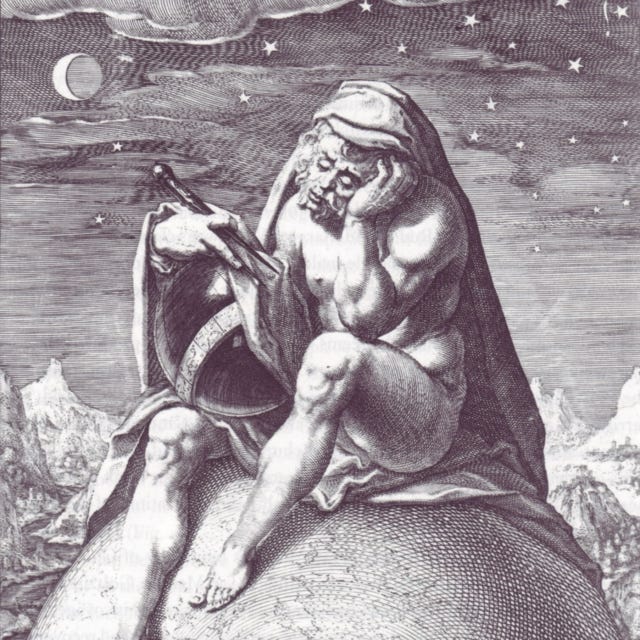
Cassian understood acedia as a demonic assault specifically targeting the will’s capacity to find meaning and fruitfulness in the here and now. The demon’s strategy —according to this Saint— is not to make the monk sinful but to make him restless: to convince him that the fruit he seeks is always elsewhere, in the next thing, the better commitment, the more spiritually productive environment.
There are some of the elders who declare that this is the midday demon spoken of in the ninetieth Psalm.3
You will not fear the terror of the night,
nor the arrow that flies by day,
nor the pestilence that stalks in darkness,
nor the destruction that wastes at noonday.
— Psalm 91:5-6
The earliest Greek translations of this Psalm speak of daimonion mesembrinon, which literally translates to a demon, evil spirit, or supernatural entity at midday or noontime. You can see that the english translation that speaks of "destruction” misses a bit of the original meaning that refers to an actual spiritual force, not just a random, unguided “destruction”.
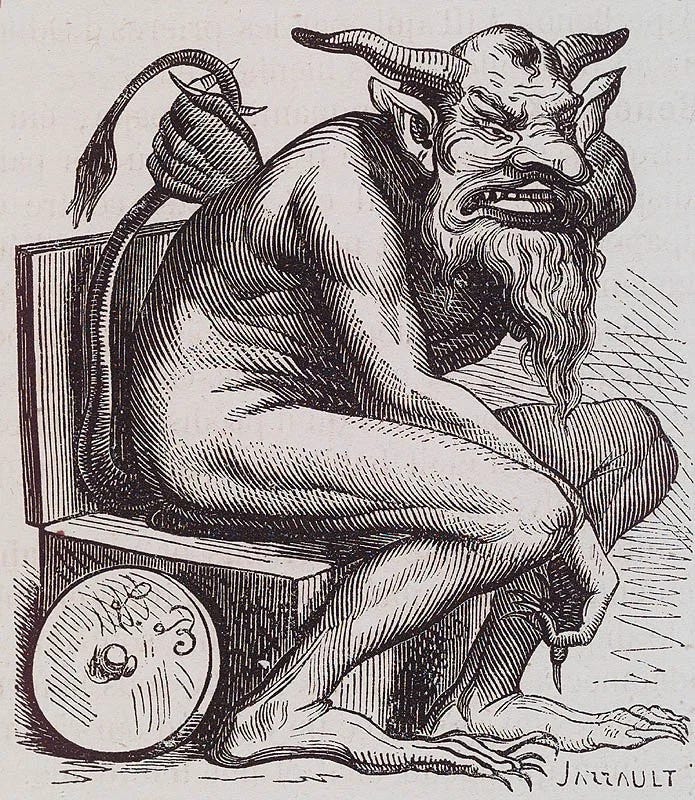
This is a very unique form of spiritual attack, because it’s not one that comes in darkness or temptation but in the middle of ordinary work, in the full light of a regular day, when nothing dramatic is happening and the soul simply cannot stay put.
This is why acedia can be so difficult to recognize: it does not even look like sin, but more often than not, as simply reasonable discontent.
It’s easy to be oblivious to this demon’s attack, but when left unchecked, he is one of the most comprehensively destructive forces in a man's life.
Spiritually, your faith lacks a strong foundation. You parish-hop without ever being formed, you begin prayer routines and abandon them quickly, and your relationship with God remains permanently shallow. When suffering comes (and it will), you will have nothing to stand on because you never stayed put long enough to build anything solid.
Professionally, you never become excellent at anything. Excellence requires the kind of sustained, unglamorous commitment that acedia makes impossible. You move from job to job, project to project, always leaving before the difficult part, which is precisely where mastery is built. You will spend your career being competent at many things and exceptional at none.
Relationally, you become impossible to depend on. Your friendships stay surface-level because real friendship requires the willingness to stay through conflict and disappointment, which the noonday demon tells you is a signal to leave. Your capacity for marriage is directly affected, because the vow of lifelong commitment that marriage requires is precisely what acedia makes unbearable. The men and women in your life learn, gradually, not to count on you.
Psychologically, acedia produces a very specific and very corrosive form of anxiety: the permanent suspicion that you are missing out on something better elsewhere. Over time this hardens into an identity. You become the man who tries everything and commits to nothing.
Vocationally, you never answer the question of what you are actually created for. The man dominated by acedia spends his life feeling called to something great while systematically avoiding the conditions under which greatness is actually formed: stability, repetition, endurance, and the willingness to be ordinary for a very long time.
The compounding effect of all of this is that your life always looks busy but feels completely empty. You slowly become the man who has moved through many places, many relationships, many commitments, and many versions of himself, and who has no real deep-rooted fruit to show for any of it, because he never stayed anywhere long enough.
Cassian understood this with clinical precision. And he also identified exactly why this feeling hits hardest at midday, and more importantly, he prescribed a remedy that is the opposite of what every instinct tells you to do.