




One of the most effective tricks that the devil has pulled is the way he’s convinced most well-intentioned Christian men that making peace with mediocrity is actually an expression of humility.
He has convinced us that ambition is pride, that smallness of soul is virtue, and that aiming for more is always, necessarily selfish. The consequence of this scheme is that most men now operate under a mindset that justifies mediocrity: they not only have accepted smallness, but have actually constructed a seemingly valid justification for it, calling it humility.
St. Thomas Aquinas gave this condition a name eight centuries ago: pusillanimitas. Smallness of soul. He classified it as a sin, and most specifically, as a sin opposite the virtue of magnanimity.

Whereas some other, more scandalous sins are easier to recognize and treat, the sin of pusillanimity is trickier, precisely because it hides itself behind a veil of false humility that too easily blinds men to the dangers of small-mindedness and gives them a comfortable excuse to avoid the hard work that greatness requires.
As we’ll see, however, the vice of mediocrity is greatly destructive, as it makes it nearly impossible to truly aim for holiness, and therefore handicaps us when it comes to pursuing the vocation of all Christians.
What is Magnanimity?
Aquinas describes magnanimitas as the stretching forth of the mind toward great things, in Summa Theologiae II-II, Q. 129:

He mentions that magnanimity is a virtue under fortitude, and the accurate recognition of one’s God-given capacity and the willingness to act in proportion to it. The magnanimous man, for example “deems himself worthy of great things in consideration of the gifts he holds from God” 1.
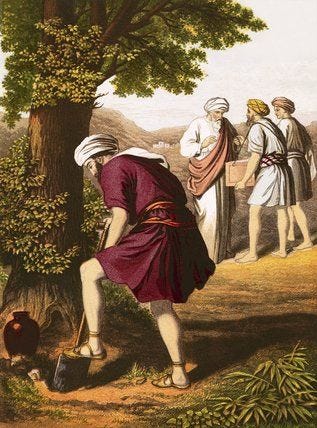
The important thing to note here is that magnanimity doesn’t go against humility, as it has nothing to do with boasting or feeling prideful, and it is instead a way of converging upon the same truth as humility. Humility is understanding that everything you have comes from God and belongs to God. Magnanimity is understanding that it’s because of that that you are responsible for doing something good with it. Having genuine gifts and refusing to use them isn’t really humble, but rather evasive and cowardly. In contrast, magnanimity means daring to pursue great things because you recognize and treasure the gifts God has given you, instead of burying your talents in the ground out of cowardice.
The Opposite Vice: Pusillanimity
Aquinas defines pusillanimitas in Q. 133 as the vice opposed to magnanimity by defect. It is possible to go against magnanimity by thinking too highly of yourself or by falling into prideful arrogance, but that’s not what we’re dealing with here. The pusillanimous man underestimates himself, or more precisely, refuses to engage with the question of what he is actually capable of out of fear of what he might find out. In practical terms, pusillanimity looks like:
Staying in a phase of “vocational discernment” for years without ever committing and putting your talents to good use.
Having a business idea, a creative project, an apostolate, or some calling you’ve been “preparing for” in private while never actually taking action.
Consistently defers to others to make your decisions for you because stepping forward and carrying the banner means there’s a risk of failure.
Reframing your fear of commitment as prudence, your fear of failure as humility, and your fear of greatness as contentment.
According to Aquinas, the pusillanimous man sins not because he has wrongly estimated his gifts but because he has refused to even look for and use them. He even cites the parable of the talents to exemplify the vice of pusillanimity:
Hence it is that the servant who buried in the earth the money he had received from his master, and did not trade with it through fainthearted fear, was punished by his master (Matthew 25; Luke 19).
— St. Thomas Aquinas, ST II-II Q. 133, A. 1.
The servant in the parable was not condemned for losing the talent his master gave him but for burying it out of fear. And is this not the story of the modern man? That he fears failure, and even success, so much that he opts to never dare?
We know then that pusillanimity can disguise itself as humility, so the critical questions that arise are: how does a man tell the difference between the two? And what does genuine magnanimity require of us practically?
We can look at Aquinas for answers, as he identifies the precise difference between genuine humility and the sinful smallness of soul we’ve been criticizing. Once this is understood, we can devise a practical plan to foster magnanimity and kill the mediocrity that has kept you timid and fearful all this time.