



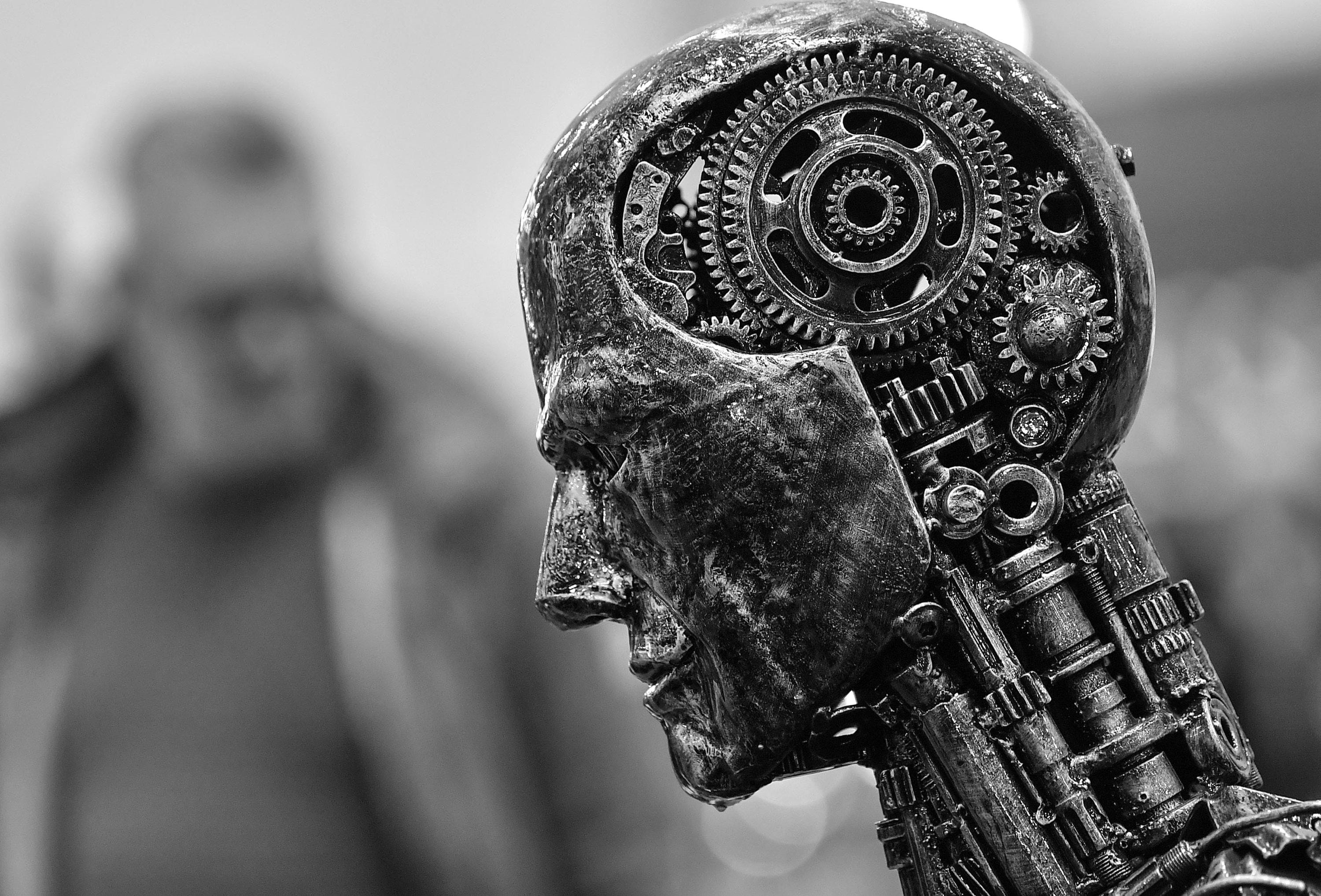
AI has been a hot, controversial topic in the online Catholic™ sphere lately, sparked mainly by the controversies surrounding perhaps the most famous Catholic AI company, Truthly. I won’t get into the ins and outs of the drama, because I do not want to spark any more outrage when I don’t really know all the facts, but just so you have enough context, many Catholic content creators had issues with a post that Truthly uploaded (which has since been deleted), in which they suggested asking their chatbot to create custom prayers for users. Another well-known creator that is sponsored by Truthly uploaded a video saying that he had had a great confession thanks to an examination of conscience that he’d gotten from Truthly. These two things, as far as I know, are what caused the controversy.
I definitely think that Truthly crossed some dangerous lines. The suggestion to ask a chatbot for custom prayers raises the concerns I describe in rule 5 below, but this won’t be an article about any one company or any one isolated event, but rather my personal take on AI as a whole, which I hope helps you in discerning whether or not —and how— you should use it.
In this article, I’ll explain why I don’t think Catholics should abandon AI entirely, give five rules for using it, and name the one area where I think it should never go: our prayer and sacramental life. I’ll cite Pope Leo’s Magnifica Humanitas whenever relevant to show the Church’s position on this specific topic.
I Understand the Revulsion
First of all, let me be clear: nobody dislikes the dystopian grip of technology as much as I do. I wish we could just turn back and realize we have been taking it way too far. Perhaps with the rise of accessible technology we are economically better off in general, but what are we giving up in the process?
Is our mental health worth a flat-screen TVs with endless subscriptions?
Is the insanely high rate of male suicide worth the robot “girlfriends” you can now build with AI?
Pope Leo’s encyclical names the danger clearly:
“For less discerning users, it can also be misleading, creating the illusion of a relationship with a real personal subject. When words are simulated, they do not build genuine relationships, but only their appearance.
The artificial imitation of care or support can become particularly risky when it enters contexts where real relationships and emotional bonds are lacking. Here, the danger is not so much that a person may believe they are communicating with another person, but rather that they may gradually lose the very desire to form genuine human connections.”1
Just because we can keep creating new technologies, does it mean we should?

We have become so obsessed with “progress” that we don’t stop to consider the larger implications of the technology we’re building. And what’s worse, we track such “progress” using arbitrary measures like GDP and other economic metrics that don’t necessarily correlate to actual well-being.
So yeah, I get you. When I see news stories about AI p0rn and when I come across the thousandth fake influencer on Instagram, I understand the disgust you feel.
But we need to realize there is no going back. Technology is here and it’s here to stay, whether we like it or not. And even though perhaps we shouldn’t describe technology as “neutral”, we still have a choice to use it for good or for evil.
“Technology is never neutral, because it takes on the characteristics of those who devise, finance, regulate and use it. Therefore, the primary choice is not between a ‘yes’ or ‘no’ to technology, but rather between constructing Babel or rebuilding Jerusalem”.2
Whether we Use the Tools or Not, the Devil Will Still Use Them
Some uses of technology are definitely evil. The AI girlfriends, the deepfakes of real people, and many more. In general though, as Pope Leo writes in his encyclical, I think the moral value of a technology depends on the intentions of those who create it and those who use it. What that means is that even advanced technologies like AI are mere tools that can be used to further a cause, whether it is pure or impure.
We might see technology advancing quickly, and in our longing for a more natural and traditional world, we can perhaps refuse to use it outright, thinking this to be a righteous act of rebellion. But what really happens when good men refuse to learn to use new technologies is that we voluntarily surrender some of the most powerful tools in this cultural war into the hands of immoral men who will use and abuse them to gain an edge.
If good men of God refuse to fight the cultural war, godless men will win it. Technology is here to stay, and someone will use it. Whoever does will have an edge. Whoever learns how to use it without being consumed by it will be able to spread their message farther and wider than those who don’t. The cultural war will be way more difficult to win if we handicap ourselves and shoot ourselves in the foot by willfully diminishing our influence.
None of this means a Catholic who abstains from AI is doing something wrong. You can absolutely choose not to use it, and it wouldn’t be immoral to do so. My claim is simply that it’s also not inherently wrong to use it as long as you do it prudently.
Meet Them Where They Are
Look, people will use technology. We have to pick our battles. And unless somebody goes full uncle Ted and destroys the entire system, technology is here to stay, and fighting against that fact is a losing battle. So a better one would be to try and save young men, women, and children from being brainwashed and manipulated by those who profit from their attention and meet them where they are to show them a different message.
A better battle is to actually fight this bloody cultural war, learn how to use the amoral tools that technology offers to spread the Gospel far and wide, and to show the millions of people who will never stop using technology that there is a better way than the one the consumerism and compulsive use that mainstream media pushes so heavily.
We can’t keep surrendering power to people who clearly have no interest in promoting any kind of human flourishing. Refusing to use technology, when you would probably be using it for good, feels too much like abandoning the fight. It feels too much like complaining about the state of the world without taking action to fix things.
I think you should learn to use technology, and then learn to use it wisely so that it doesn’t consume you or lead you astray. But imagine if we could make a collective effort big enough so that young men scrolling TikTok would stop seeing exclusively thirst traps and mind-numbing content and find quality content that inspires, motivates them, and makes them think differently. Wouldn’t that be a valid reason to use AI (carefully and wisely, as we’ll see later)?
You can use technology without it using you, and if you learn to do it correctly, you might, ironically, even save young minds from the addiction, depression, and mind-control that so often come with excessive use of technology.
I think that is a worthy battle to fight.
Now, onto the practical. Here are some basic rules to use AI without selling your soul to it.
Practical Rules for the Moral Use of AI
1. Never confuse or mislead willingly
If you’re using AI to create something that you know will confuse some people into thinking it’s real, you’re going down a very dangerous road. If you’re going to use AI, make sure you’re open about it and you’re not trying to mislead people into believing something is real when it isn’t. If AI had a hand in something you create, don’t hide it.
2. Use it as support, never as a replacement for you
This will depend on your occupation, so here are a few examples:
If you’re a writer, you could use AI to spellcheck or suggest improvements on a finished text, but not to write instead of you.
If you’re a designer, you could use it to brainstorm ideas or do market research, but the final creation should come from your own mind.
If you’re a teacher, you could use it to help you research a certain topic, but you should never let it create the actual contents of the class you will be teaching.
In general, my take on this is that you can use AI to do the things that are not fundamental to your role and occupation, so you can focus better on perfecting your main craft. When you find yourself getting AI to do the bulk of your job, you’re already crossing some lines that I wouldn’t recommend crossing.
3. Don’t use it for art
Art cannot come from a machine. AI is great to do repetitive, mind-numbing tasks, but art is a big part of what makes us human. It’s one of the deeper ways in which we can connect with the divine and the eternal. You don’t want to outsource that to a machine. Art communicates the depths of the human soul, and a machine will never be able to replicate that:
So-called artificial intelligences do not undergo experiences, do not possess a body, do not feel joy or pain, do not mature through relationships and do not know from within what love, work, friendship or responsibility mean.3
4. Use the right tools with proper discernment
Most AI companies are secular and profoundly anti-Christian. If you’re going to be using AI (especially when it comes to questions, research, or tasks that somehow relate to faith and morals), just use a Catholic AI app built on Church sources like Acutis AI. Magisterium AI is also good.
But still, know that ‘Catholic’ is a label anyone could try to use for the wrong reasons, so even then, check any answer against the Catechism, and ask a priest or spiritual directors about anything that actually matters.
5. Don’t ever make it a part of your spiritual or prayer life
This is the clearest line we can draw: do not allow AI to enter into the sacred space that should only be shared by you and God. That means that you should not use it to write prayers for you, you should not use it to write examinations of conscience, and you should not elevate it to any sort of spiritual authority.
If you have questions about theology, you can ask it to show you where to find the answers, but you shouldn’t ask it to give you spiritual advice, to provide moral judgments of any sort, or to somehow come between the very intimate relationship that is meant to be from human to God, not from human to robot to human to God.
I’m very interested to read your thoughts on this, so please leave a comment and tell me if you agree or disagree with my position here.
Also, one final word: stop thinking so much about AI and just go to Mass, pray more, spend time outside and with your family, and love God and your neighbor. Whatever doesn’t lead you to that is probably a distraction from the things that actually matter.
Ad Maiora Nati Sumus,
Juan


Thank you for reading!
If you enjoyed this post and could leave a like or comment it would be greatly appreciated, as it will help my work reach more people.
Also, if you liked this article, you’ll love my book.

Leo XIV. (2026). Magnifica humanitas [Encyclical letter]. Libreria Editrice Vaticana. https://www.vatican.va/content/leo-xiv/en/encyclicals/documents/20260515-magnifica-humanitas.html
Ibid.
Ibid.
I don't entirely agree when it comes to creating art: I can't draw, and I enjoy making Baroque etchings or comic panels for my virtual collection. When I show them to friends or if they ask for a copy, I make it clear they aren't originals. As you rightly point out in the article, it takes a healthy discernment of God-given human intelligence.
I love it!
"Should I use AI?" isn't as good a question as "How's my relationship with God?"
"Does AI use separate me from God?" is a powerful question worth asking. If yes, what a revelation. Spending more time with God is a great way to gain perspective on everything else!
Studying 1 Corinthians this fall and my biggest takeaway is that relying on God to provide wisdom to help me solve problems isn't a bad thing, but asking him for wisdom to discern which problems I should be solving is better.
He knows better than anyone what matters. He knows better than anyone what's best for me, and wants that!
I want to want what God wants.