



One of the most interesting paradoxes of the Christian faith is that the most dangerous place in the spiritual life is not rock bottom, but the point where a man believes he is finally doing well.
You see, when you are neck deep in scandalous sins, it’s easy to know you’re failing. The nature of your vices is clear, and even if you find it difficult to defeat them, at least you can see them and know what you are fighting against.
When you get the more scandalous sins of the flesh under control and begin making progress in the spiritual life, it’s common to fall into the trap of thinking that you have triumphed, and that sin is a thing you have left in the past. But that’s precisely what the devil wants you to think, and it’s of critical importance that you do not lower your guard but remain all the more vigilant. Because when you think you are making progress is when more subtle sins can enter your life and poison your soul.
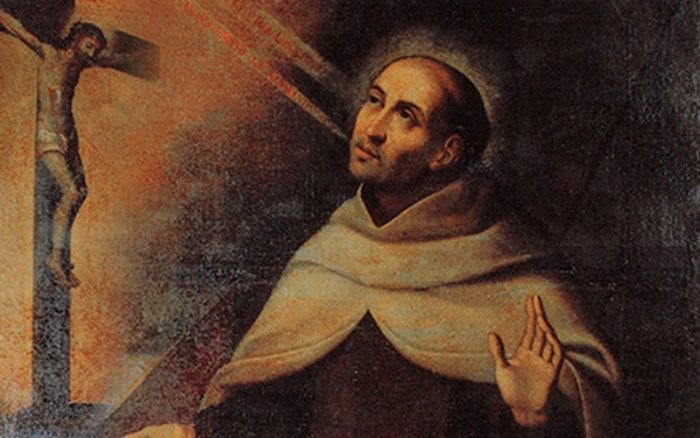
St. John of the Cross, in Book I of the Dark Night, writes a clear warning for the man who is past the early stages of the spiritual walk. What he recognized is that once you take the first —very worthy— steps towards sanctity and start detaching from the world, the seven capital sins don’t disappear all of a sudden (like most people unconsciously believe), but they transform into subtler, even deadlier forms of the same vices.
Not For Casual Readers
In the first chapters of possibly his most famous work, the Dark Night of the Soul, St. John of the Cross writes specifically to those who have started to make genuine progress in their spiritual life, developed a serious prayer life, real devotional habits, and real commitment to the faith.
He refers to them as “progressives”, those souls who have left behind the beginner phase and entered the spiritual life successfully but have not yet been purged of the subtle imperfections that piety itself produces. It’s important to understand who he’s talking to, because the specific spiritual stage you’re in will determine the battles you’ll have to fight.
Into this dark night souls begin to enter when God draws them forth from the state of beginners—which is the state of those that meditate on the spiritual road—and begins to set them in the state of progressives—which is that of those who are already contemplatives—to the end that, after passing through it, they may arrive at the state of the perfect, which is that of the Divine union of the soul with God.1
St. John’s Dark Night is particularly interesting because it is directed towards those who have already chosen to walk the ways of The Lord. I believe this is due to the fact that he understood a widely ignored but fundamentally critical truth: the further a man progresses in devotion, the more sophisticated his temptations become. St. John devotes a large portion of the Dark Night of the Soul to this diagnosis, but also provides an encouraging solution to the spiritual deadly sins, which we’ll share at the end of this article.
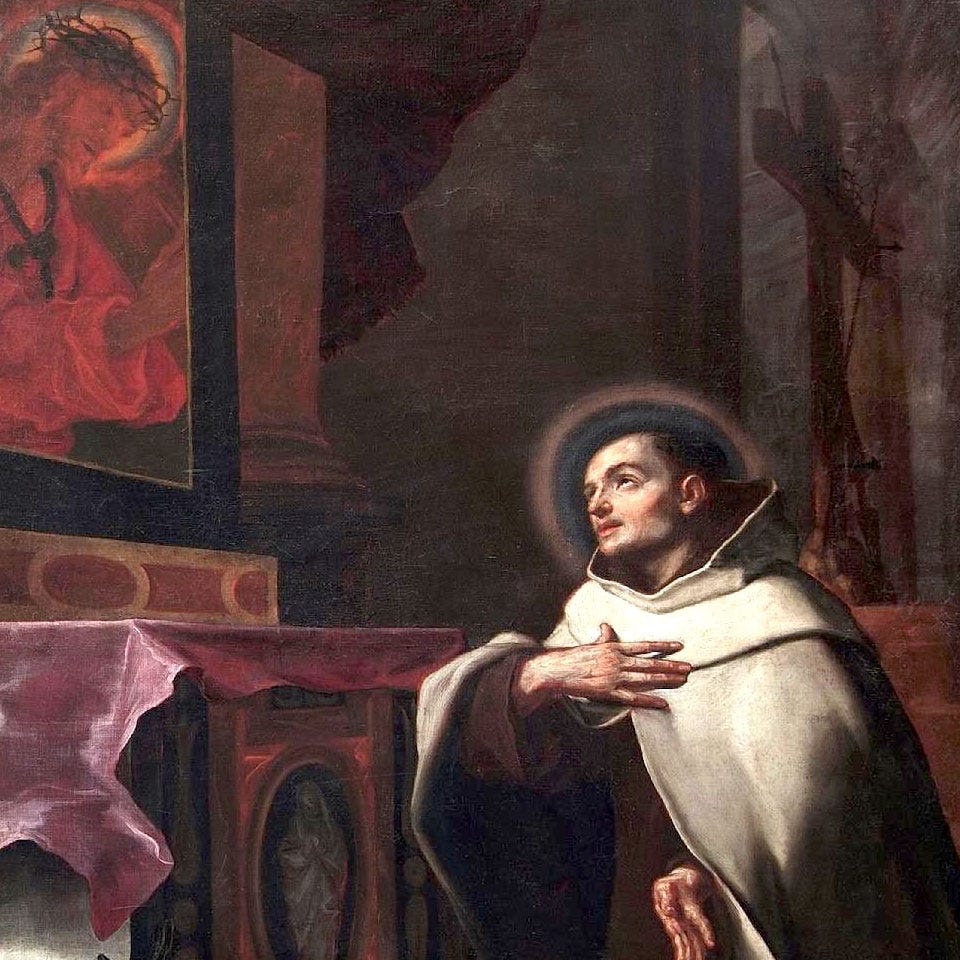
The Spiritual Seven Deadly Sins
As mentioned earlier in this article, the seven capital sins do not disappear when a man becomes devout. When their more scandalous forms get defeated, the sly demons go underground and resurface dressed in religious clothing. These subtler spiritual deadly sins are harder to detect precisely because they wear the appearance of virtue.
The logic behind St. John’s warning is that every single capital sin comes back in a different form when a man moves on from being a beginner to a “progressive” in the spiritual life. And it’s these subtler forms of vice that we must be on the lookout for, because they are just as deadly as the obvious capital sins that plague the lives of beginners.
The temptation for pride, for example, does not vanish when a man begins to pray seriously. It attaches itself to his prayer life and makes him feel spiritually superior to those souls who are behind, struggling, or fighting against sins he has already conquered. And so on and so forth with each deadly sin, as we will see next. The first three are those which are easier to recognize:
Pride
The most obvious way in which pride manifests itself spiritually is in the man who talks about his prayer life, his fasting, his reading, his conversions or other “spiritual achievements”. However, this sin is so subtle that it’s also alive in the man who feels private satisfaction at his consistency or who is quietly contemptuous of less serious Catholics.
St. John names a specific detail that exemplifies how spiritual pride leads a man away from correction and the call to humility:
Sometimes, too, when their spiritual masters, such as confessors and superiors, do not approve of their spirit and behavior (for they are anxious that all they do shall be esteemed and praised), they consider that they do not understand them, or that, because they do not approve of this and comply with that, their confessors are themselves not spiritual.
And so they immediately desire and contrive to find some one else who will fit in with their tastes; for as a rule they desire to speak of spiritual matters with those who they think will praise and esteem what they do, and they flee, as they would from death, from those who disabuse them in order to lead them into a safe road—sometimes they even harbour ill-will against them.2
If you notice yourself feeling pleasure when you correct others, or feeling good about yourself when you see how much progress you’ve made, remember that it’s not you who’s the author of your sanctification, but God, through His grace, which you do not merit. Pride is subtle and dangerous, and we need to be extremely vigilant to avoid following its seductive voice.
Avarice
Spiritual avarice is the vice of the man who hoards those objects and practices that relate to the spiritual life: devotional objects, books, prayer routines, etc.
The man who consumes endless hours of “catholic self-improvement” content is very often not doing it with purity of intention, but simply as a habit of avarice in which he seeks to hoard as much knowledge as possible. You probably know someone who is always beginning a new prayer program, a new rule of life, a new spiritual reading project, without ever going deep in any of them or without genuinely needing them for his spiritual progress. It’s not like these practices or objects are bad in and of themselves, but they become dangerous when the attachment becomes not to God but to the feeling of “spiritual acquisition” that they provide.
Many can never have enough of listening to counsels and learning spiritual precepts, and of possessing and reading many books which treat of this matter, and they spend their time on all these things rather than on works of mortification and the perfecting of the inward poverty of spirit which should be theirs.
Furthermore, they burden themselves with images and rosaries which are very curious; now they put down one, now take up another; now they change about, now change back again; now they want this kind of thing, now that, preferring one kind of cross to another, because it is more curious.3
Lust
Spiritual lust is one of the least obvious spiritual deadly sins. Simply put, it is the disordered attachment to the feeling of devotion. This vice occurs when someone falls for an overly sentimental version of the faith, in which they only engage in spiritual practices as long as they feel good about them.
For it often comes to pass that, in their very spiritual exercises, when they are powerless to prevent it, there arise and assert themselves in the sensual part of the soul impure acts and motions, and sometimes this happens even when the spirit is deep in prayer, or engaged in the Sacrament of Penance or in the Eucharist. These things are not, as I say, in their power; they proceed from one of three causes.4
Spiritual lust is a sort of pleasure at the outcome of spiritual practices, which leads the soul to undertake them not with the intention to love and honor God, but as a means to feel a certain way: excited, at peace, gratified, joyful.
You see this in the man who only prays when it feels good, who mistakes emotional consolation for genuine contact with God, and who abandons prayer when the sweetness dries up.
John of the Cross identified four more spiritual sins, and fittingly saved the most devastating diagnosis for last, after which, he provides a solution that begins with a simple but counterintuitive mindset reframe: