



In the shadows geniuses die, without ever knowing of their magic, granted, without knowing it, long before they were born.
En Algún Lugar, by Duncan Dhu (translated from Spanish)
“Just start”. That’s the most common advice given to any man trying to begin something. Whether he wants to start a business, write a book, paint a masterpiece, become a famous musician, or simply do something new in his life, that’s the advice he’ll receive from those who have some experience and can thus show him the way.
A few years ago, when I was trying to start my online business, that was the main advice that other, more experienced businessmen gave me. And it’s pretty good advice, don’t get me wrong.
The problem is that it’s… incomplete.
Being able to pull the trigger and just start moving forward is a great skill to have, and it’s one that most men don’t possess. That skill, by itself, it’s almost enough to make you completely different from the masses of modern men. Almost.
The reason why it’s not enough it’s because, well, starting doesn’t actually mean anything. Anyone can start. And many do.
The true difference, the one thing that actually makes you stand out, and the one skill that most men do not have, is knowing when to finish.
Not “Quit”, Finish
“Finishing ” doesn’t mean quitting and giving up. Knowing when to finish means mastering the skill of “good enough”, and being aware of the lies of letting perfectionism.
Ironically, if you don’t know how to finish what you start, you will always end up quitting before the job is done.
I’ve seen it time and time again: a guy wants to start a creative project, a business, transform his body, etc. He starts off with great motivation and discipline.
Let’s say for the sake of this example that he is trying to start and grow an Instagram account —and this is based on a true story, although I’ll change the specific details.
How Projects (and Dreams) Die
He starts with an idea in mind: he wants to create content about martial arts. He’s passionate about it, and wants to make it into a side hustle of sorts. He’s very knowledgable about martial arts, having trained for decades, and he has a lot of things to share.
He decides to start. Because I have been posting content on Instagram for many years, he comes to me for advice and I tell him to just start and figure out the specifics later. I think that’s solid advice, but as I’ve come to realize, it’s incomplete.
So he starts, and sets out to create a logo. He spends 2 weeks working on it, until he has something that satisfies him. After that, he sits down to create his business plan. He researches, watches videos, writes everything down, devises a plan for the next 3 years of his content creation business.
This takes him a month, because he wants to “make sure the strategy is solid”. After he has his business plan, he decides to join an online business community to learn how to put his plan into practice.
He spends 2 months adjusting his plan, learning how to create videos, twitching the logo and branding and networking with other aspiring creators.
Finally, he is ready. He decides to create his first video. Because his mind is overloaded with information, he tweaks and modifies the video for a whole week. He sends it to 5 friends to get feedback, and they all say something different.
So he adjusts it. He tweaks it again but isn’t satisfied. The music doesn’t fit well enough. The video footage could have higher definition. The AI voice he chose isn’t what he wants. So he decides to start over. He spends another week creating it. He gets feedback from the community. Tweaks it again. He is then forced to take a few days off from his project because his 9 to 5 got too demanding.
He’s back at it again, and takes another week to finalize the video. Finally, after months of work, he’s finally ready to publish.
He hits publish and the video goes out to his 10 followers. 2 likes, 0 comments and shares. Basically zero return for the amount of time and energy he has spent creating it.
In his mind, it’s a terrible tradeoff. Months of work for this result?
Naturally, he gets discouraged. He concludes it’s just too much work. And with the approach he took, he’s absolutely right.
The Other Side of The Coin
While my friend spent months working to even get his first post published, some random guy created a bad logo in 5 minutes, used a random post template for his posts, and committed to posting daily for 4 months.
His content was terrible at first, but he learnt how to make it better by gauging the response of the audience he started to build. He didn’t get caught up in wanting all posts to be perfect, and understood that the most important thing was to put his stuff out there, even if it felt mediocre at first, to avoid becoming a failed perfectionist.
He understands that the production quality of his work needs only to be correlated to the size of his project.
He knows there’s no point in spending all that time, money and energy just so no one sees what he created. So he starts with something that’s “good enough” and improves as he goes.
Many well intentioned projects die before they even get off the ground because their founders fall for the trap of perfectionism. They never know when to finish editing and just hit “publish”. Genius works of many kinds never see the light of day because their authors get consumed by perfectionism and fear publishing something that is not good enough.
You have to learn to be satisfied with imperfection. This does not mean you should settle for mediocrity, but it does mean you have to learn to recognize when you’re just procrastinating and avoiding to launch your project out of fear, and you have to be able to just pull the trigger when it’s 90% optimized, instead of waiting for it to be 100% ready —which it’ll never be.
My Own Experience
As a writer, I have had to learn this myself. I started publishing my own books back in college, and they were absolutely terrible. But it was necessary to publish them so I could get better.
I frequently ask myself what’s better: a single near-perfect book, published by my grandchildren after I’m long gone, because I spent my entire life making the “final tweaks” on something that was good enough 50 years ago?
Or 50 books that increase in quality progressively, as I learn by doing, publishing, getting raw feedback from the people that read my work?
After a certain point, the right choice is to just publish the bloody thing. The true challenge isn’t starting, it’s finishing the job. It’s leaning back and saying “this is good enough”, and having the guts to post it, publish it, send it, or whatever action signals the completion of your project.
Start fast, yes, but most importantly, finish fast, and iterate and improve fast.
Otherwise you’ll be one of the millions of men who had great ideas, had the guts to start working on them, but left them all unfinished, unpublished, incomplete.
And you’ll be the proud author of 30 half-books, the proud creator of 20 logos for businesses, the proud musical mind behind 200 different song beats with no lyrics.
You’ll be on your deathbed looking back at the talent you had, realizing all of the things you created were good enough, and the only reason you didn’t share them with the world was fear, masking as perfectionism.
Thank you for reading!
If you enjoyed this post, please consider upgrading to a premium subscription.
A premium subscription gives you access to the entire archive of posts, as well as one new in-depth article every single week.
God bless you,
Juan
Thank you for reading!
If you enjoyed this post and could leave a like or comment it would be greatly appreciated, as it will help my work reach more people.
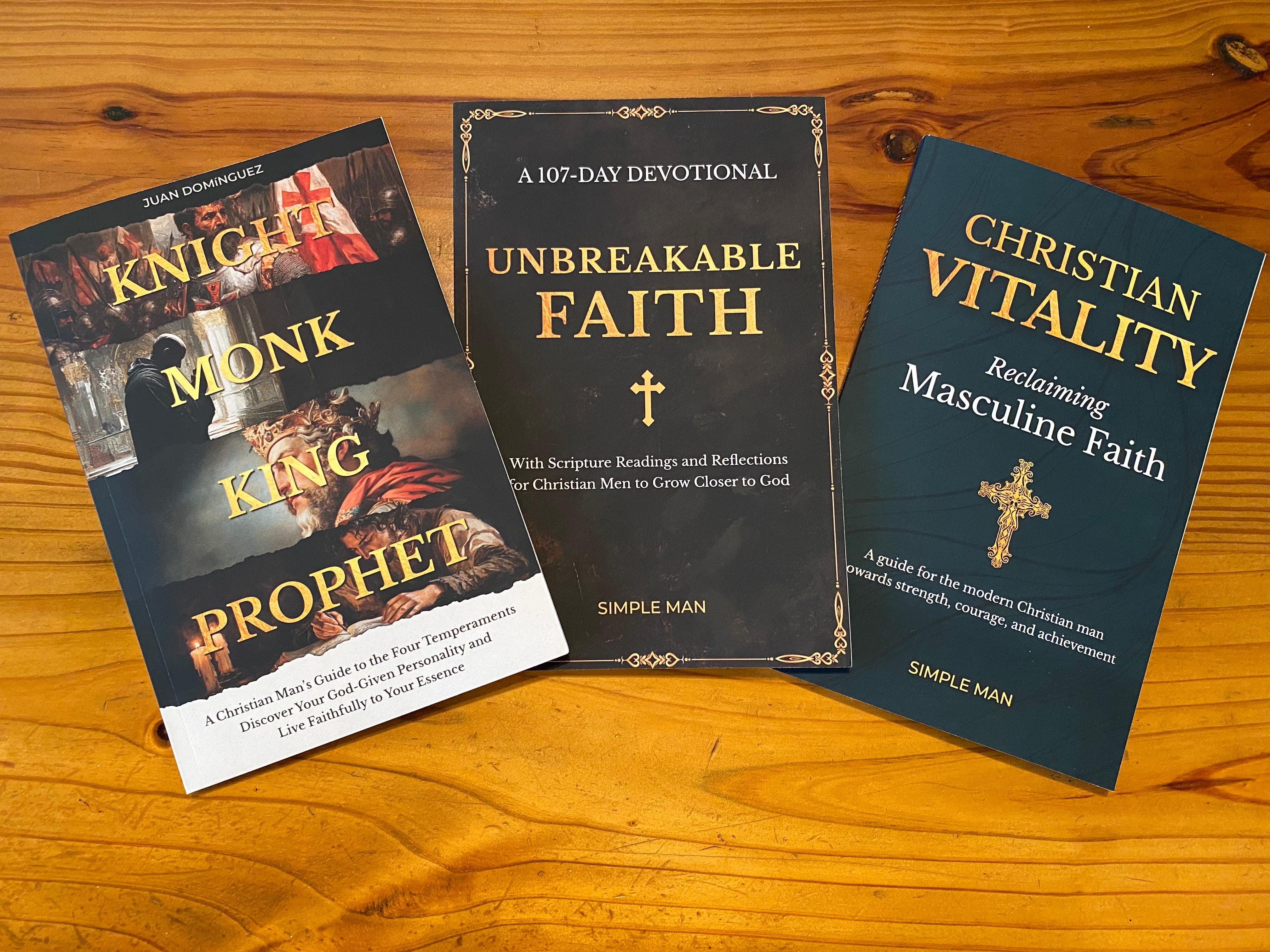
If you liked this article, you’ll love my books.
My goodness. You’ve just written my life story…with a few tweaks. I actually got the book published. Even after having had a key critical review, it ended up containing a rather glaring error…on page 67, if burning memory serves.
What might have seemed the end of my world was sorted with a discrete errata stick-on label on the offending page.
Came to find it wasn’t the end of the world. My hurt pride recovered. Life goes on, and the project continues, according to God’s will, not mine. Quitting early would have avoided the lessons in humility Our Lord had prepared for me.
I think this advice is never given out enough. Beyond a certain threshold, where our mastery of a given skill is clearly limited, additional effort and time will give only a marginal return on the effort invested. Yet, that threshold moves up,with every piece of work that we produce. Long-term experience across multiple pieces beats one experience of a long project.