


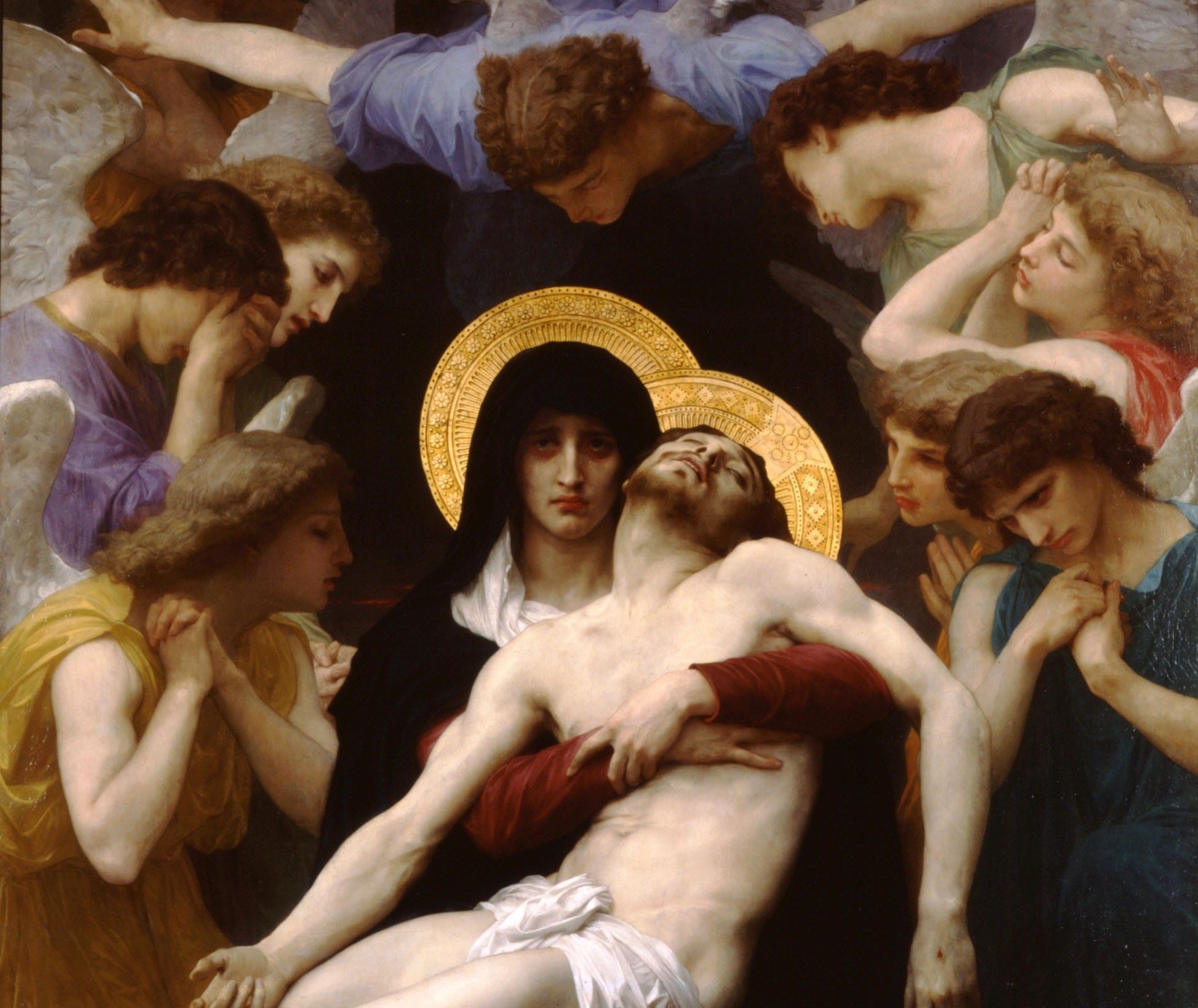
Over the past couple of weeks, I wrote a series of articles detailing my conversion process from non-denominational protestant to Catholic. In them, I mentioned that one of the issues I still wrestled with in the Catholic Faith, was the fact that even now I sometimes felt like it was wrong to devote so much time to praying to Mary and the Saints, when I could be praying directly to Jesus.
Recently I came across a video by Dr. Taylor Marshall, who’s also a convert from Protestantism, that clarified this matter for me. He explained it perfectly, and to be honest, I thought it was crazy how easy it was to understand and how long I struggled to find an answer to a question that is, in essence, simple.
A Zero-Sum Model
When I wasn’t a Catholic, and even after reconverting, I saw Marian devotion and the honoring of saints as something that necessarily went against my worshipping Christ. My view was, simply put, a zero-sum game: You either worshipped Jesus fully, or you took some of the “worship” due to Him and directed it towards Mary and the saints.


Under this view, every time I chose to pray to Mary, asked a Saint to intercede on my behalf, or whenever I did anything that wasn’t praying directly to Jesus and spending time with Him, I felt awkward, as if I was doing something wrong.
So I definitely understand the Protestant concern that by talking about Mary, the saints, and all the other things that Catholics are often wrongly accused of “worshipping”, we give Jesus less and less. I think it’s a valid concern, but it stems from a fundamental misunderstanding.
Love Isn’t Measured in Time
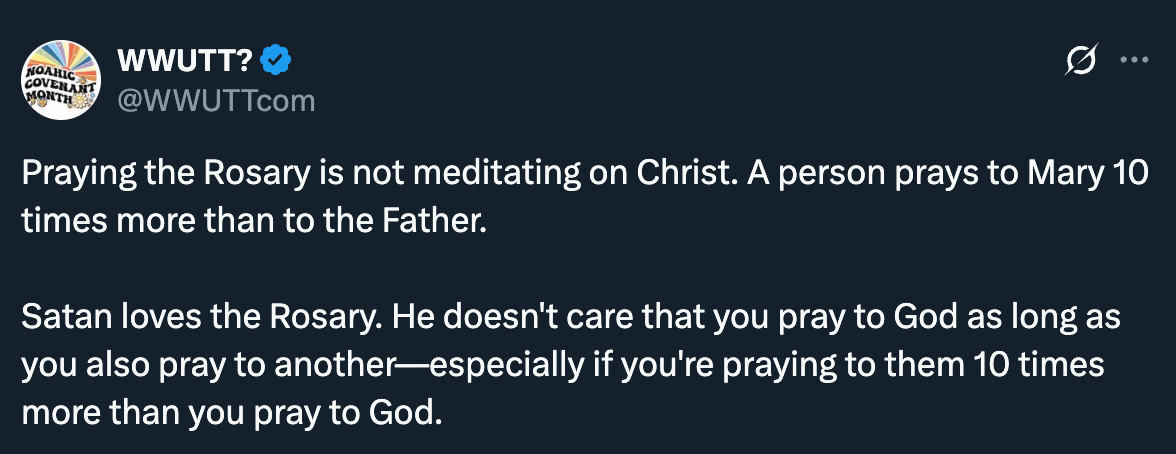
You see, the earlier pie chart would definitely be true, if love was measured in hours given, or if it was a limited resource. And to avoid any misunderstandings, of course spending time with someone is a way of showing them your love, but do you know how else you can show someone you love them? By loving his or her loved ones.
Love isn’t measured in time, because love is much, much greater than that. The measure of love isn’t merely "how much time do you dedicate to someone”. That’s a part of it, sure, but think about it: in order to show your wife your love for her, you also respect, appreciate, and try your best to love her family. Not only that, but knowing her family allows you to know and love your wife more.
The same is true for Christ: wouldn’t you want to know, love, and have a relationship with His family? His apostles? His mother? That would help you get to know Him better, just like we know other people better when we meet the people they grew up with, their families, and their friends.
Love Magnifies Love
Dr. Marshall explains this perfectly using his family as an example:
I found this is [so] when I married my wife, and then we had a baby. I loved the baby, and then, because of the baby, I loved Joy more.
And then, when we had two more kids—twins—instead of loving Joy less than I had before, I actually multiplied my love for Joy even more.
So that when we had eight kids eventually, my love for my wife magnified. It multiplied.
If I had thought about my love for my wife as pieces of pie, I would have robbed her and given [some] to the kids, and I would have loved her less.
But that's not actually how it works. As a matter of fact, I also began to love her parents—her mom and her dad—and her sisters, and then her sisters' husbands, and then their kids.
And the whole family grew, and the love grew, and it magnified, and my love for my wife increased despite all these extra people being brought in.
And that is Catholicism.
— Dr. Taylor Marshall, speaking in this video.
And think about it in the opposite direction: does God love you less when He loves another?
Or is it the case instead, that the more we love, the more we can love, and the more people we love, the more we love God, the very source of love?
Love is not a limited resource. It can’t be measured by a pie chart or explained as if it was. Do you think, when judgment day comes, Jesus will rebuke you for spending time with His mother? For having a relationship with her? With His apostles?
Or could it be that maybe He would rejoice in the fact that His love spread from Him through us to everyone else?
Just like your wife wouldn’t despise you for spending time and loving her mother, I don’t believe that Jesus would dislike us loving His.
In fact, the way I see it is that your wife would appreciate you for loving her so much that you even love her mother, and Jesus would appreciate you for being kind and loving to His.
And Mary said,
“My soul magnifies the Lord, and my spirit rejoices in God my Savior, for he has looked with favor on the lowliness of his servant.
Surely, from now on all generations will call me blessed; for the Mighty One has done great things for me, and holy is his name.”
— Luke 1:46-49
The key is that love magnifies love, and it isn’t transactional. It’s not about time, but about having a loving heart, one in which you can fit as much love as possible.
I hope this article helped you if you were having some of the same concerns that I did, and I hope that when we both get to Heaven, Jesus will welcome us with open arms, not merely because of how much we loved Him, but also because we found in our heart enough space to fit all the people He loves too.
Thank you for reading!
If you enjoyed this post and could leave a like or comment it would be greatly appreciated, as it will help my work reach more people
If you liked this article, you’ll love my books.

“It’s a scientific fact that gratitude reciprocates.” https://www.whitenoise.email/p/gratitude
This is an elegant defense but I think it relies on some priors that most Protestants (myself included) didn't have.
E.g. "The same is true for Christ: wouldn’t you want to know, love, and have a relationship with His family? His apostles? His mother? That would help you get to know Him better, just like we know other people better when we meet the people they grew up with, their families, and their friends." This is very true! But the leap of translating that broad idea into specific Catholic veneration rests on assumptions that they are one and the same. We certainly should study/admire/bear affection for the saints! But even the combination of that and dwellingl in Christ's love for them stops visibly short of venerative practices (from the perspective of someone unfamiliar with them, at least), so you may want to detail that argument more. God has put so many yet-living people in our lives to reflect His love towards.
Also, please correct me if I'm wrong (and I mean that literally, as I am still learning), but doesn't Catholic justification for praying to the saints rest more in it reflecting their love for you than your love for them? So even when one accepts the practice, I'm not sure it is the best thing to connect to your broader argument.